Pramac Racing Ducati: why this team still points to one of MotoGP’s most revealing team identities
Some MotoGP teams are remembered for trophies, others for liveries, and others because they seem to sit at the exact point where factory ambition and independent hunger collide. That is why the team pramac racing ducati still carries such strong meaning. Even though Pramac has since moved into a new phase of its story, the Ducati era remains the period that most clearly defined what the team looked like, how it raced, and why it mattered so much inside the premier-class paddock.
What made Pramac compelling was never just the colour of the bike or the names of the riders. It was the structure itself: an independently owned team that often operated with enough seriousness, technical access, and competitive sharpness to disturb the usual factory hierarchy. In MotoGP terms, that is a very specific identity. It is one thing to be a satellite team. It is another to become so credible that the paddock begins to treat you almost like a parallel centre of power.
What defines Pramac Racing Ducati at first glance
At first glance, Pramac Racing Ducati was recognisable because it never really felt like a conventional customer outfit. The team projected the polish, discipline, and technical coherence of a top-level structure, yet it preserved the edge and urgency that often come from operating outside the formal factory shell. That combination gave it a very particular presence in MotoGP.
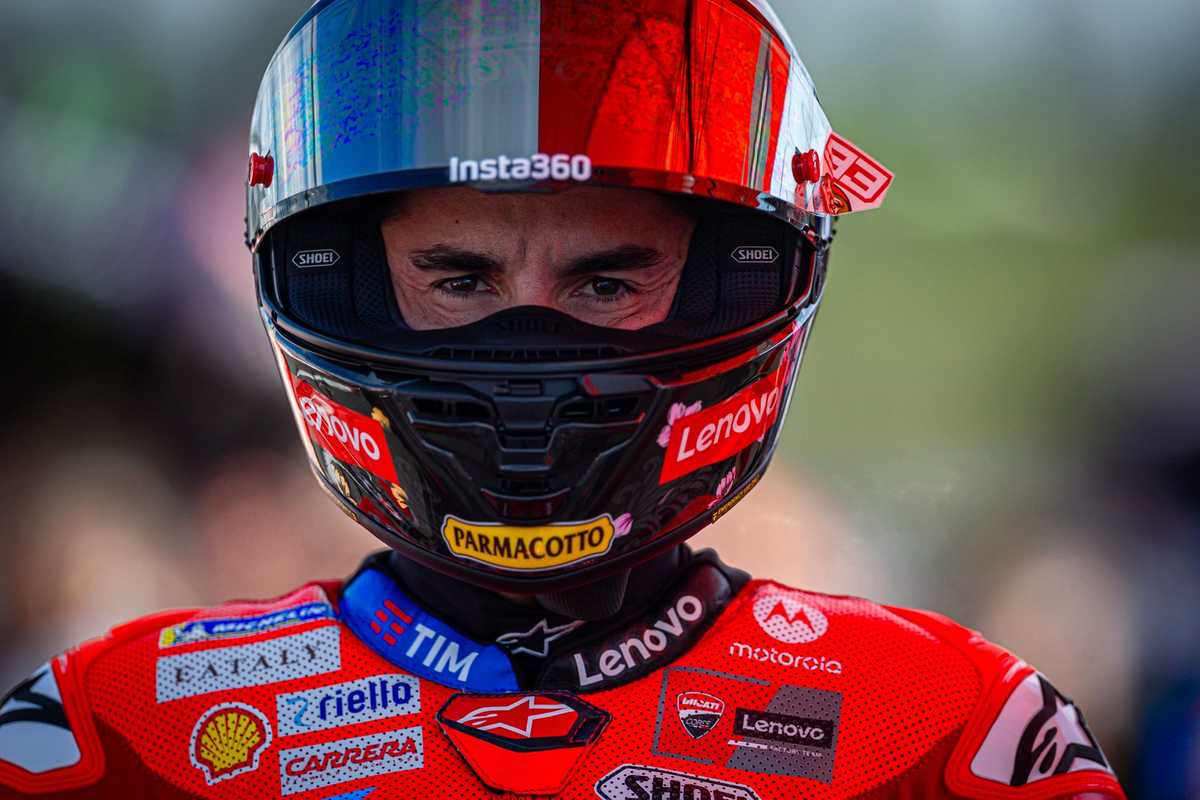
In visual terms, it looked modern, sharp, and commercially confident. In sporting terms, it looked dangerous. Riders who entered the Pramac garage were not there simply to circulate in the shadow of Ducati Lenovo Team. They were there to run at the front, influence the championship, and prove that the line between official and independent was thinner than many people liked to admit.
That is why the team pramac racing ducati usually reflects more than a simple team.
The DNA of the team
The real DNA of Pramac during its Ducati years was competitive independence without theatrical rebellion. It was not an anti-factory team in spirit. It was a team that grew strong by aligning itself closely with a manufacturer while preserving its own internal authority, tone, and sporting pride. That distinction matters.
Plenty of satellite teams exist in MotoGP, but not all of them develop the same aura. Pramac’s version of the role was more assertive. It increasingly became a high-performance extension of Ducati’s wider racing ecosystem, but one that still felt like Paolo Campinoti’s team rather than a disguised factory clone. Its ambition was not abstract. It was visible in rider choices, garage quality, technical credibility, and in the expectation that strong weekends were not surprises but part of the normal target.
There was also something very modern about its identity. Pramac came to represent a type of MotoGP structure that fit the championship’s contemporary reality: close manufacturer integration, elite data use, strong staffing, and enough sporting confidence to challenge supposedly bigger names on merit. It was not built around nostalgia. It was built around relevance.
That is one reason the team’s Ducati phase became so resonant. Ducati’s recent rise in MotoGP was based on depth as much as outright speed, and Pramac was one of the clearest expressions of that depth. The team embodied how a manufacturer’s competitive reach could extend beyond the official red bikes while still remaining brutally effective.
How this team fits into the MotoGP world
To understand where Pramac fits, it helps to interpret the keyword carefully. Pramac racing ducati refers most credibly not to a factory team in the strict formal sense, but to a satellite structure whose Ducati connection became so important that it often sat near factory level in relevance. That is why the term feels natural to fans, even if the exact organizational label requires nuance.
Pramac spent more than two decades linked to Ducati, and over time that alliance became increasingly meaningful. From 2013 onward, the relationship strengthened into a more factory-supported model, with closer technical cooperation and a more serious development role. That evolution changed how the team was perceived. It was no longer merely filling grid space with respectable machinery. It was becoming part of the strategic architecture of Ducati’s MotoGP success.
In that sense, Pramac occupied one of the most interesting positions in the championship. It was independent in ownership, but deeply embedded in the competitive ecosystem of one of MotoGP’s strongest manufacturers. It could nurture riders, apply pressure, test the hierarchy, and sometimes make the paddock ask uncomfortable questions about what “factory advantage” really means in modern MotoGP.
That place in the MotoGP world became even clearer when Jorge Martin turned Pramac into a title-defining force. Once an independent team can fight through an entire season on equal emotional and competitive terms with the official structure, the old mental categories start to look incomplete.
The image the team projects in the paddock
Inside the paddock, Pramac Racing Ducati projected seriousness without stiffness. It felt ambitious, but not artificially grand. There was professionalism in the way it presented itself, but also enough sporting aggression to avoid looking like a polite support act. That balance is rare.
The team’s image was helped by the kind of riders it attracted and the kind of performances it enabled. Pramac increasingly became a place associated with speed, technical trust, and opportunity. It looked like a garage where a rider could both express himself and be measured against the highest level of MotoGP competition. That is a powerful reputation for any independent structure.
It also projected a certain modern paddock credibility. Pramac did not rely on mythology. Its stature came from execution. Good machinery, proper staff, clear intent, and the sense that every result had consequences beyond Sunday evening. In other words, it looked like a team that mattered to the championship’s internal balance, not just to its own sponsors.
Even its emotional tone was distinctive. The team did not carry the ceremonial weight of a traditional factory giant, but it did carry visible pride. That gave it an identity somewhere between challenger and insider: hungry enough to unsettle the order, established enough to belong near the centre of it.
The numbers that help explain the team
Numbers only matter here if they clarify identity, and in Pramac’s case they do. The Ducati relationship lasted more than twenty years before the team entered a new era in 2025. That duration alone shows that this was not a temporary technical arrangement but one of the most significant long-term alliances in the MotoGP paddock.
The final Ducati phase gave the team its strongest statistical expression. In 2023, Pramac won the Team World Championship and confirmed itself as more than a competitive satellite outfit. In 2024, it went even further, with Jorge Martin becoming the first rider of the MotoGP era to win the premier-class world title with a non-factory team. That achievement transformed the identity of Pramac Racing Ducati from respected contender into a genuine reference point in modern MotoGP.
Those results matter because they explain the keyword’s staying power. People still search for pramac racing ducati because that phrase points to an era in which the team was not merely associated with Ducati machinery; it became one of the clearest proofs that Ducati’s competitive system could produce title-winning force beyond the official factory garage.
Why this team feels distinctive
Pramac feels distinctive because it managed to be both integrated and identifiable. Many teams are remembered mainly through the manufacturer attached to them. Pramac, by contrast, developed a recognisable selfhood inside that manufacturer relationship. It was linked to Ducati, but it was never just a background surface for Ducati branding.
It also stood apart because its success changed the emotional geometry of MotoGP. Fans are used to factory teams representing the summit. Pramac complicated that picture. It suggested that in the right technical and organizational conditions, the independent structure could become not a romantic outsider, but a fully serious championship actor.
That is a very different kind of distinctiveness. It is not built on sentiment. It is built on function, performance, and pressure. Pramac Racing Ducati came to represent a team identity shaped by closeness to excellence, but not dissolved by it.
Conclusion
In the end, pramac racing ducati remains such a meaningful MotoGP keyword because it captures more than a sponsor-manufacturer pairing. It evokes a team that turned the satellite idea into something sharper, heavier, and more consequential. Pramac’s Ducati years showed how an independent MotoGP structure could look polished without losing edge, aligned without losing personality, and ambitious enough to leave the factory world glancing over its shoulder.
That is why the team’s identity still matters. Pramac was not just present in MotoGP; it helped redefine what a non-factory structure could be. And that is the lasting impression of Pramac Racing Ducati: not a side story to Ducati’s rise, but one of the clearest ways to understand it.