Yamaha R1 MotoGP: why this name really leads to the Yamaha YZR-M1
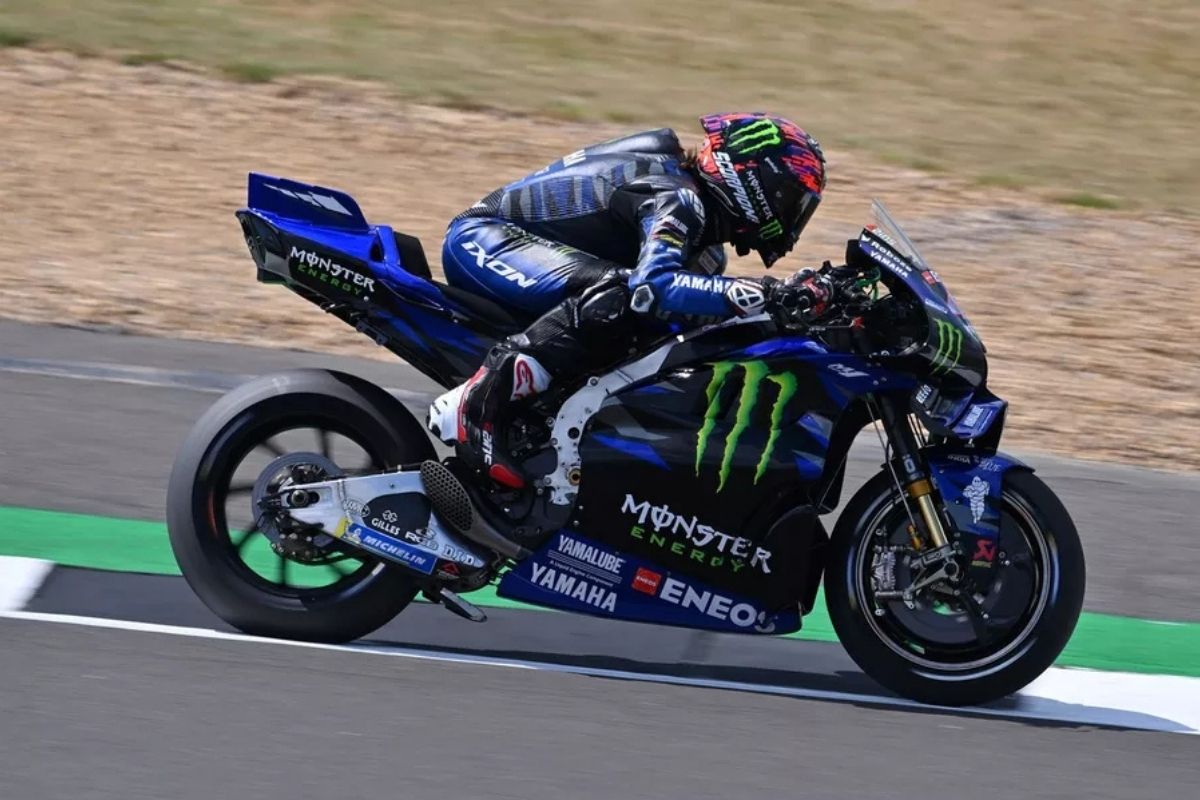
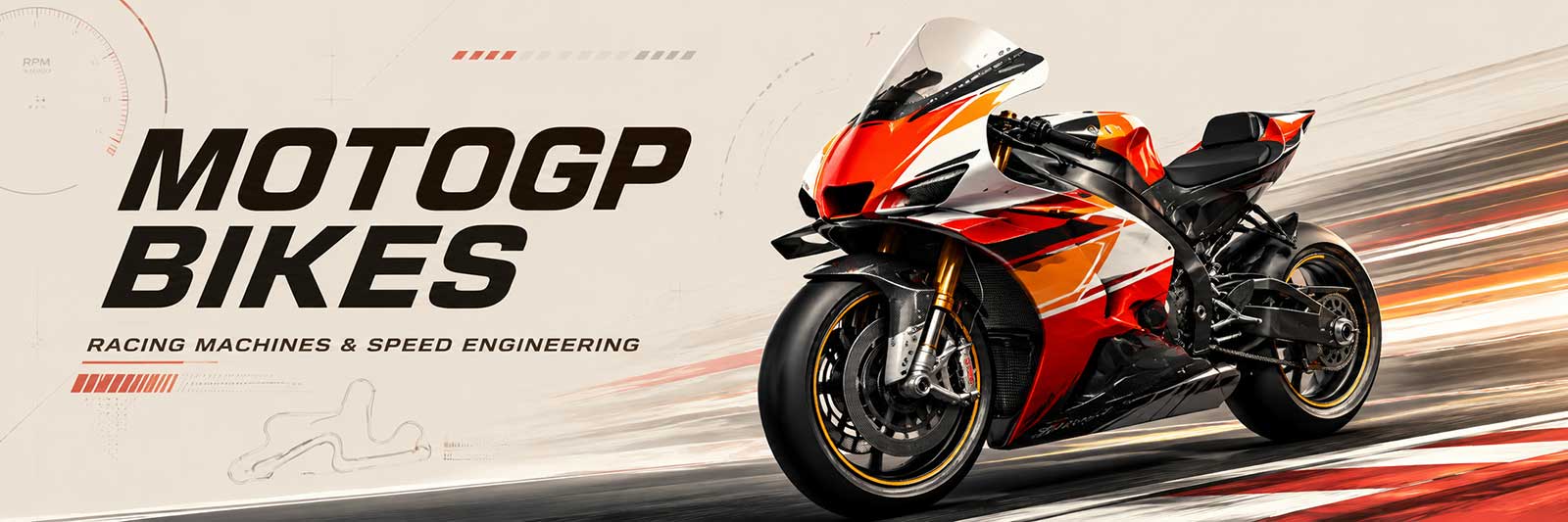
“Yamaha R1 MotoGP” sounds precise, but in MotoGP terms it points to the wrong kind of machine. The road-going YZF-R1 belongs to the superbike world; Yamaha’s real premier-class prototype is the YZR-M1, a purpose-built MotoGP motorcycle developed under prototype regulations rather than production-bike logic. MotoGP itself is restricted to 1000cc four-stroke prototypes with a maximum of four cylinders, which is the frame that gives this Yamaha project its technical meaning.
That matters because the Yamaha MotoGP story has never been only about branding. For most of the YZR-M1 era, Yamaha stood apart through its long commitment to the inline-four, a layout associated with corner speed, fluid turning behaviour, and a less brutal but often more elegant way of making lap time. Only from 2026 did Yamaha formally move the YZR-M1 to a V4 configuration, ending the inline-four chapter that had defined the bike’s identity for years.
Technical summary
If you search for “yamaha r1 motogp,” the credible MotoGP answer is the YZR-M1: Yamaha’s prototype race bike. Historically it was the grid’s defining inline-four, known for preserving corner speed and asking the rider to be precise and committed. In 2026, Yamaha switched the project to a V4, which makes the keyword even more important to interpret carefully.
What this breakdown covers
- Why the R1 and the YZR-M1 are technically different worlds
- How Yamaha’s engine choice shaped the bike’s character
- What the chassis and track behaviour usually revealed
- Why electronics, tyres, and aero mattered so much to the M1
Quick access
What “yamaha r1 motogp” actually means in MotoGP terms
The first correction is simple but essential: the Yamaha R1 is not Yamaha’s MotoGP bike. The R1 is a production-based superbike platform, while the YZR-M1 is a prototype designed for the premier class, where constructors are free to innovate within MotoGP’s technical limits. That distinction changes everything, because a prototype is not built around showroom continuity. It is built around lap time, tyre management, packaging, and the specific demands of Michelin tyres, carbon brakes, electronics, and modern aero.
So when readers type “yamaha r1 motogp,” what they usually want is the Yamaha machine used in MotoGP and the way it behaves relative to Ducati, Aprilia, KTM, or Honda. In that sense, the correct editorial centre is the YZR-M1 project as a whole: the bike that carried Yamaha to Fabio Quartararo’s 2021 world title, then went through a long period of technical pressure before the factory committed to a V4 future for 2026.
Engine layout and the power character that defined the Yamaha project
For years, the YZR-M1’s defining technical signature was its inline-four configuration. In MotoGP’s broader ecosystem, that mattered because Yamaha increasingly stood alone with that layout after Suzuki left the championship and the rest of the field leaned on V4 architecture. MotoGP itself highlighted the contrast clearly: inline-four bikes were typically associated with superior corner speed, while V4 machines tended to offer greater straight-line strength and acceleration authority.
That does not mean the Yamaha was weak in every acceleration zone or magically perfect in every flowing section. It means its lap-time logic often came from carrying speed, keeping the bike calm through long arcs, and asking the rider to connect corners with minimal interruption. The M1’s reputation was built less on brutal exits than on the quality of the line it could hold and the confidence it could generate once the rider committed to a smooth, fast cornering style. That is why the bike’s identity often felt more rhythmic than explosive. The speed came from continuity.
From 2026 onward, however, Yamaha formally changed course. The factory confirmed that the YZR-M1 would move to a V4, with MotoGP and Yamaha both framing the switch as the start of a new era. That is a major technical and philosophical break. It tells you Yamaha concluded that the long inline-four tradition, however distinctive, no longer offered enough ceiling against the modern demands of acceleration, packaging, and competitive development.
Frame logic, stability, and the way the Yamaha carried itself through a lap
If the engine gave the old M1 its voice, the chassis gave it its grammar. Yamaha’s MotoGP bikes have long been described through feel rather than brute-force data: precision on initial commitment, trust at lean, and a tendency to reward riders who could preserve momentum rather than interrupt it. That is why the bike so often appeared at its best on circuits where time through the corner mattered as much as horsepower down the straight. MotoGP’s own technical analysis around places like COTA made exactly that contrast, noting that Yamaha’s less powerful inline-four could still be dangerous because of what it carried through the turns.
In practical terms, that usually translated into a machine that wanted to be ridden cleanly. The rider could not always afford to square the corner up in the same way as a more acceleration-rich V4 rival. The Yamaha often looked better when the line was rounded, the entry was deliberate, and the exit was prepared earlier. When that rhythm broke, the bike could look ordinary. When the rhythm held, it could look beautifully coherent.
That also helps explain why the M1 has often been judged through subtle rider comments rather than through simplistic speed-trap headlines. A motorcycle that lives on confidence at lean and on continuity between phases is exquisitely sensitive to small changes in rear grip, front support, or turning assistance. On a bike like that, one missing piece does not just cost a tenth on corner exit. It can disturb the entire sentence of the lap.
Brakes, tyres, electronics, and where the Yamaha met the asphalt
Modern MotoGP bikes do not reveal themselves only through engine layout. They reveal themselves where hardware meets control. MotoGP machines run Michelin tyres and, across the grid, the braking environment is defined by carbon brake technology supplied at the highest level by Brembo, with riders choosing among different front disc diameters depending on circuit severity. That matters for any Yamaha analysis because the bike’s personality has always depended on how well it lets the rider load the tyre, release the brake, and carry turning intent into the apex.
The electronic layer is just as important, even if public detail is naturally limited. MotoGP regulations mandate an official IMU, and the class has a tightly managed electronics environment, which means performance differences come less from fantasy “secret systems” than from how each factory calibrates the relationship between engine braking, anti-wheelie behaviour, torque delivery, and rider confidence. On a Yamaha, that calibration has historically mattered enormously, because a bike that depends on flow and corner speed can lose its identity quickly if the rider cannot trust what the rear tyre is doing at the transition from brake to throttle.
Aero adds another layer of compromise. MotoGP’s technical rules now regulate the aero body closely, and the challenge is no longer merely adding downforce. It is choosing how much front-end support you want in acceleration and braking without making the bike heavier in direction changes or less natural at lean. For Yamaha, that balance has never been cosmetic. It goes to the heart of whether the bike remains a flowing corner machine or becomes something stiffer, more loaded, and more physically demanding.
How the project evolved when Yamaha needed more than tradition
One of the clearest signs that Yamaha understood the scale of the challenge came from structure as much as hardware. The new concessions system placed Yamaha in Rank D in 2024, giving it the greatest testing freedom, and the factory expanded its presence further by bringing Prima Pramac in as a second factory team from 2025. Four bikes on the grid, more riders, more data, and more mileage were not symbolic moves. They were engineering moves. They reflected a manufacturer trying to accelerate understanding rather than simply protect an old identity.
That same urgency could be seen in 2025 as Yamaha’s V4 journey moved from rumour to confirmed development path, then to race-track visibility, and finally to full adoption for 2026. The story is revealing. Yamaha did not abandon the inline-four lightly; the layout had defined the M1’s reputation for more than two decades. But MotoGP is ruthless. If the field evolves toward stronger acceleration, more flexible packaging, and deeper development potential, sentiment stops mattering. The machine must change.
Seen from that angle, the phrase “yamaha r1 motogp” becomes interesting for a different reason. It shows how readers instinctively reach for a familiar Yamaha performance name, yet the real MotoGP story is more radical than any road-bike association. The YZR-M1 is not a racing R1. It is Yamaha’s answer to the hardest technical questions in prototype motorcycle racing.
Why this machine still matters beyond the name
The Yamaha YZR-M1 matters because it has long represented an alternative way of making a MotoGP bike fast. Even when the championship moved toward V4 aggression, Yamaha’s prototype kept insisting that turning quality, corner speed, and rider feel could still define a serious contender. That identity brought titles, most recently with Quartararo in 2021, and it also exposed the limits of that philosophy when the competitive bar shifted.
So the best answer to “yamaha r1 motogp” is not just a correction of terms. It is an explanation of a technical lineage. The real MotoGP Yamaha is the YZR-M1, and for years it was the championship’s most distinctive inline-four. Now, in the V4 era, it is becoming something else. That transition is exactly why the bike remains worth studying: it sits at the point where engineering philosophy, rider sensation, and competitive necessity all collide.
Author: Cynthia D.