Marquez Marc Marquez: how his riding still bends the shape of a MotoGP race
Marquez Marc Marquez is not simply a fast MotoGP rider in the broad, flattering sense. He is a rider whose competitive identity is built on extreme front-end commitment, unusually late deceleration, rapid bike rotation on entry, and a willingness to accept instability that many elite riders spend their whole weekend trying to remove.
That is why he remains such a useful rider to study. Marc Márquez’s results matter, but the more revealing layer is technical: how he gets lap time, how he changes the stress pattern of a race, and how his riding can expose both the limits and the strengths of the machine beneath him. Official MotoGP records list him among the sport’s most decorated riders, and Ducati identifies him as its reigning 2025 MotoGP World Champion heading into the 2026 season.
What defines him
Marc Márquez is defined by how much load he is prepared to place on the front tyre without losing his willingness to attack. His best riding combines violent commitment with precise control: hard braking, aggressive entry, fast visual processing in traffic, and an unusual ability to keep making lap time while the bike is moving underneath him.
What this rider analysis covers
- Why his corner-entry technique became one of the key references of the MotoGP era
- How his body movement and front-end trust shape the bike’s behaviour
- What his duel management reveals about racecraft under pressure
- Why adaptation across very different technical packages matters in reading his profile
Quick access
The visible logic of his riding
The first thing that stands out with Marc Márquez is not just aggression. Many riders can look aggressive over one lap. His distinctiveness comes from the way aggression is organised. He attacks braking zones with a strong willingness to carry instability into the first phase of corner entry, then uses that disturbance rather than treating it as a mistake to be corrected. The bike often looks busy beneath him, but his inputs are not random. They are part of a riding grammar built around committing early, rotating the machine quickly, and making the corner narrower for everyone around him.
That profile made sense the moment he reached MotoGP and won the premier-class title as a rookie in 2013, before adding further MotoGP crowns across the decade. The records matter because they confirm that this was not a brief stylistic novelty. It was a repeatable race-winning method at the highest level. MotoGP’s official rider profile and later MotoGP record features place him among the most successful riders in championship history.
What makes his riding especially interesting is that he rarely looks like a rider trying to leave large safety margins. Even when he is managing a race, the visual impression is one of tension and loaded control. That is part of why he has always been easier to understand through movement than through cliché. Watch how the bike behaves under him, and the profile becomes much clearer than any branding language ever could.
Front-end trust, deceleration, and control
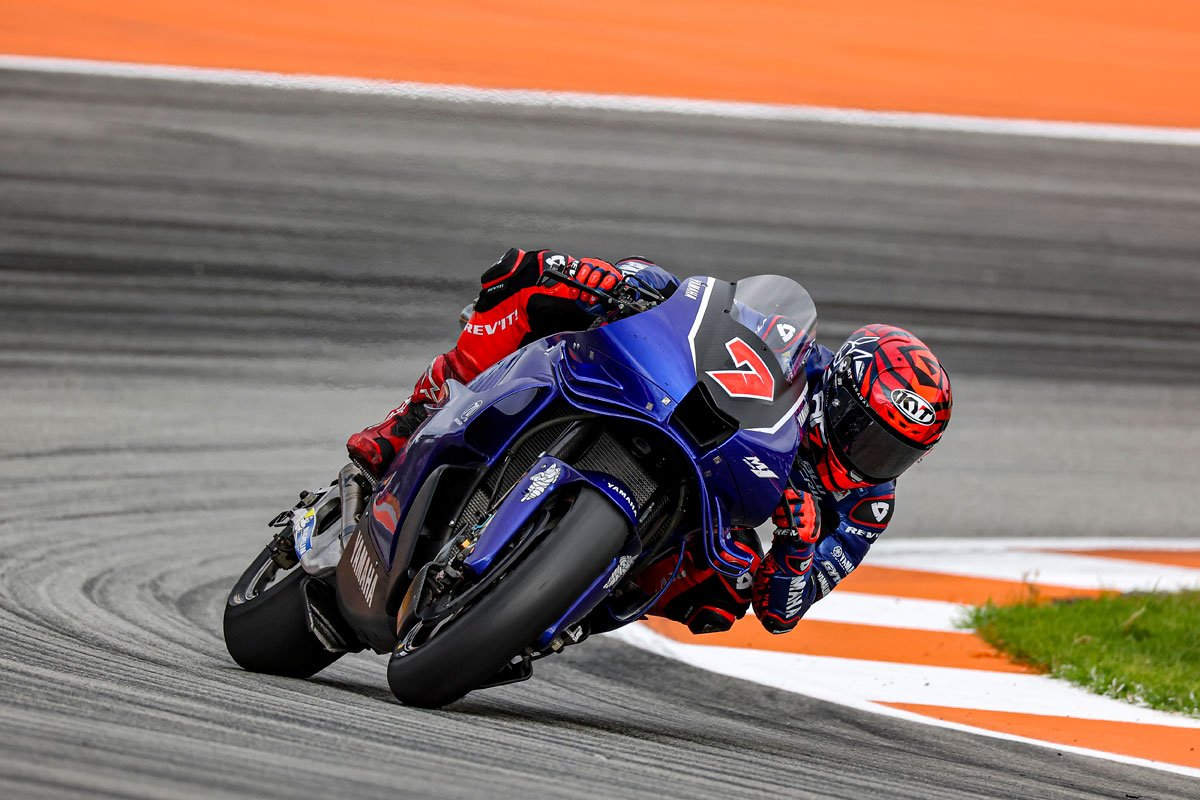
If one section of the corner best explains Marquez Marc Marquez, it is the braking phase. His entry style has long been defined by late deceleration, heavy front-tyre loading, and a willingness to keep asking the front for grip while the machine is still not fully settled. This is where his confidence separates him. He does not merely brake late in a straight line. He often continues to work the front as he begins direction change, which compresses the time available to rivals and creates overtaking opportunities where the normal line would already be closed.
That trust in the front end also explains why he has often looked most dangerous on bikes that give him a clear feeling on entry, even if the rear of the package is less naturally calm. When Márquez is comfortable, he can arrive at the apex with the bike already rotated enough to point earlier than expected. In pure technical terms, that reduces the need to wait for the machine. It lets him dictate the corner instead of accepting it.
The risk, of course, is obvious. Riding with that much front-end demand increases the cost of even small misreadings in grip, tyre temperature, or track condition. But that risk is not a side effect of his method. It is embedded in the method itself. The reward is that he can create lap time in places where many riders are still protecting balance.
Body position, load transfer, and bike movement
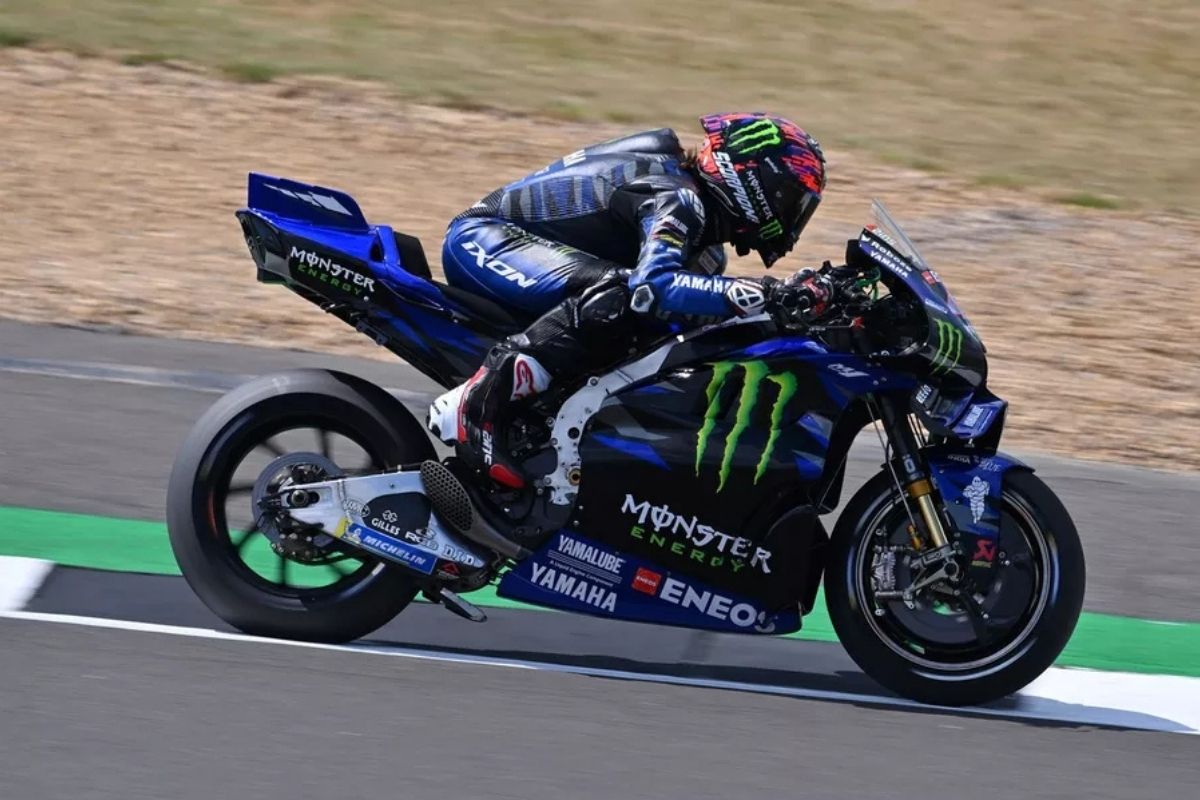
Marc Márquez has always been one of the clearest examples of a rider whose body language tells you what kind of information he is chasing from the motorcycle. His upper body often moves early and decisively, not as decoration but as a way to help the bike finish turning while maintaining front contact feel. He is also notably comfortable saving moments that would already have become crashes for many riders, which is partly reflex, partly strength, and partly a result of how accustomed he is to living near the edge of front-tyre support.
That matters because body position in MotoGP is not just about lean-angle aesthetics. It changes load paths. It changes how the rider helps the machine finish entry, how quickly the bike can be picked up, and how much stress reaches the tyre at the wrong instant. Márquez often looks like a rider willing to use his body to complete a technical task the chassis has not fully completed on its own.
There is also a physical cost. Riding this way is demanding on the arms, shoulders, and core because it requires repeated control of heavy load transfer under braking and rapid correction when the bike starts moving. Official MotoGP coverage has long linked Márquez’s career narrative not only to success but also to serious injury setbacks, which makes his continued competitiveness even more revealing when assessing the repeatability of his technique.
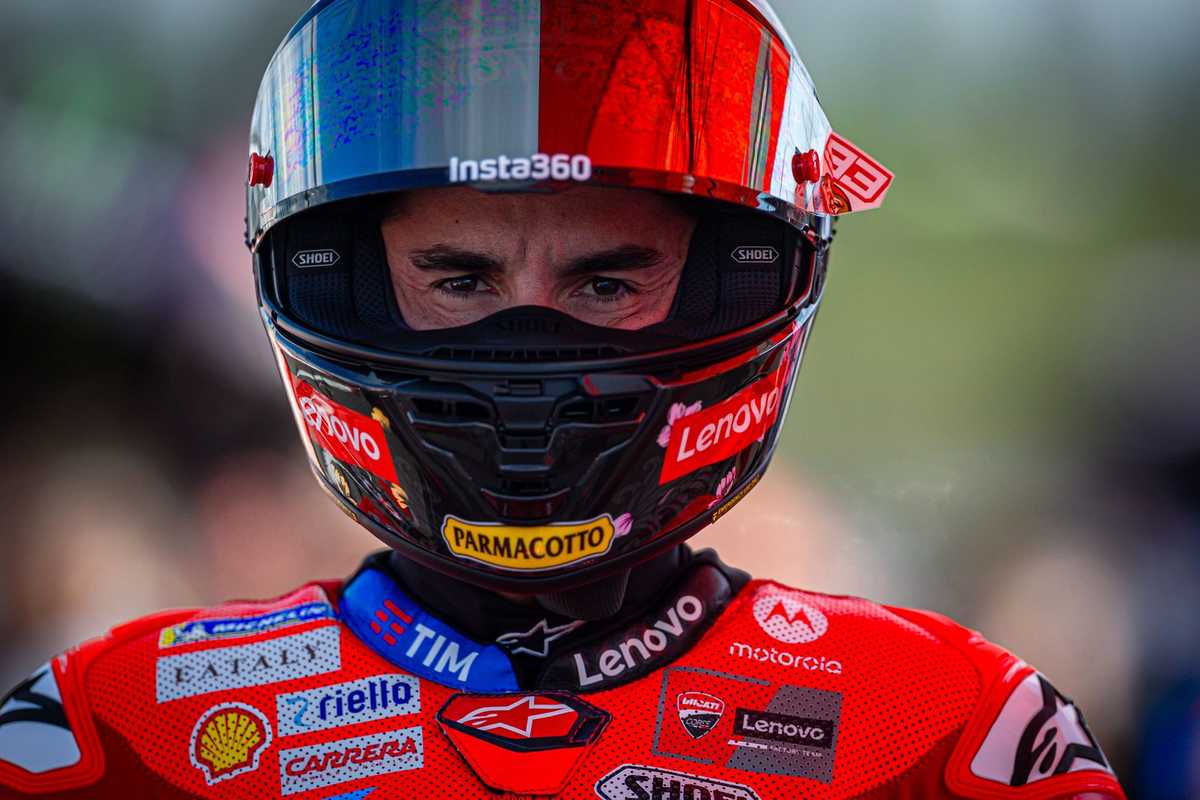
How he fights in traffic
Racecraft is where Márquez becomes even more distinctive. Some riders are clean pattern-builders who prefer to structure a race around pace and tyre conservation. Márquez can do that, but his natural reading of combat is sharper and more disruptive. He is highly alert to moments when the rider ahead leaves the slightest gap on entry. He reads hesitation quickly, and he is unusually comfortable improvising mid-battle if the first pass does not fully stick.
That makes him dangerous in groups because he does not always wait for a perfect textbook setup. He is often prepared to create the opening by changing the rhythm of the braking zone. In practical terms, rivals are not just defending a line against him; they are defending timing. He shortens their reaction window.
Importantly, this does not mean every overtake is reckless. The better interpretation is that he is one of the strongest riders of his generation at making unstable situations legible in real time. He often seems to process where grip, space, and body position will be a fraction sooner than the rider beside him. That is why his battles can look chaotic from the outside but still contain a great deal of internal order.
Technical adaptation and rider feedback
A serious reading of Marc Márquez cannot stop at the Honda years. One of the most important recent parts of his profile is adaptation. MotoGP’s official rider page lists him with Ducati Lenovo Team in 2026, while Ducati’s official material places him as part of the factory project after becoming 2025 MotoGP World Champion.
That transition matters because it tests whether a rider’s underlying technique is transferable or overly dependent on one specific machine culture. In Márquez’s case, the evidence points to something stronger than simple habit. His core traits remained identifiable: front-end confidence, entry attack, and rapid race-reading. But adaptation also required modulation. A Ducati package asks different questions from the rider, especially in how traction, acceleration phase, and rear support can be exploited across a lap.
What is interesting is not that he changed as a rider. Every elite rider must. It is that his identity survived the change. The technical details shifted, but the essential logic did not. He still looked like a rider trying to shape the bike actively rather than merely harmonise with it. That is one reason his machine feedback has always been so valuable. Riders like Márquez do not just ride a package; they reveal what part of it can truly be attacked.
The factual layer behind the rider
The hard record is strong enough that the analysis does not need exaggeration. MotoGP’s official profile tracks Márquez from his 125cc world title in 2010 to the Moto2 crown in 2012 and then to a premier-class career that made him the youngest rider to reach six world titles by 2017. Ducati’s official rider biography states that his 2025 MotoGP championship brought him to nine world titles overall, seven of them in MotoGP.
Those facts help because they frame his profile across multiple technical eras. He is not just a rider associated with one successful package, one season peak, or one isolated burst of speed. His career spans very different championship contexts, and his relevance survived injuries, regulatory evolution, aerodynamic growth, and major changes in bike behaviour across the MotoGP field.
That wider frame is essential when reading Marquez Marc Marquez as more than a highlight reel figure. The achievements show durability. The riding shows why the durability was possible.
Why his riding remains worth studying
Marc Márquez still matters because he remains one of the clearest cases of a rider whose technique can change the competitive geometry of a race. He does not simply extract speed from a motorcycle. At his best, he changes where the limit appears to be, especially on entry and in direct combat.
That is why informed MotoGP readers keep coming back to him. Not because myth is more comfortable than analysis, but because analysis keeps rewarding the effort. Study his braking, his rotation, his reactions in traffic, and his adaptation across machines, and the same conclusion returns: this is a rider whose style is not just fast. It is structurally influential.
Author: Eric M.