MotoGP Jerez: Decoding the Historical Legacy of the Circuito de Jerez–Ángel…
The Circuito de Jerez–Ángel Nieto has been one of the pillars of world motorcycle racing for decades. Built in 1985 and established in the Grand Prix scene from the late 1980s, Jerez’s mixture of slow hairpins and fast sweeping turns has given it a distinct technical identity and enduring place on the MotoGP calendar.
Summary
From its construction in 1985 to its formal renaming in honour of Ángel Nieto, Jerez has combined technical corners, favourable winter weather and a long association with top-level testing to remain central to Grand Prix motorcycle racing.
Reader preview
- Origins and how Jerez entered the world championship.
- Physical character and layout notes that shape racing there.
- Its role as a test venue and the commemorations that mark its heritage.
Quick access
Origins of the venue and first Grand Prix presence
The Circuito de Jerez was built in 1985 and quickly found a place in international motorsport. By the late 1980s it had become a regular venue for motorcycle Grand Prix events, establishing itself as one of Spain’s primary stages for world championship racing. Its foundation in the mid-1980s coincided with a period of expansion and modernization across European circuits, positioning Jerez to host premier-class competition and to attract teams looking for a technically varied test bed.
The first premier-class era and establishing identity
Once Jerez entered the world championship rota, the track’s combination of slow hairpins and flowing bends defined its early top-class character. The layout demanded a balance between braking stability and corner speed, which shaped how riders and machines approached the circuit. Over successive seasons the venue built a reputation for producing competitive, tactical racing and for revealing chassis and tyre strengths early in a season.
The venue as it changed over time
Across decades, Jerez’s evolution has been incremental rather than revolutionary. Track length figures are commonly recorded around 4.423–4.428 km in different sources, reflecting small variations in published specifications. The circuit’s administrators have worked to preserve its original racing character while implementing necessary safety and homologation updates to meet evolving international standards. Commemorative acts and selective renamings have also marked its timeline, reflecting a venue that honours its past even as it adapts.
Riders, eras and signature periods
Jerez’s long-standing presence on the calendar made it a reference point across multiple rider eras. The circuit’s technical demands have meant it remained relevant from the era of two-stroke competition through later technological shifts; its corner types and weather conditions consistently offered teams useful data and riders a test of racecraft. Because the venue continued to host Grand Prix racing across generations, it became part of the regular measuring stick for rider and machine development.
Famous races and commemorations
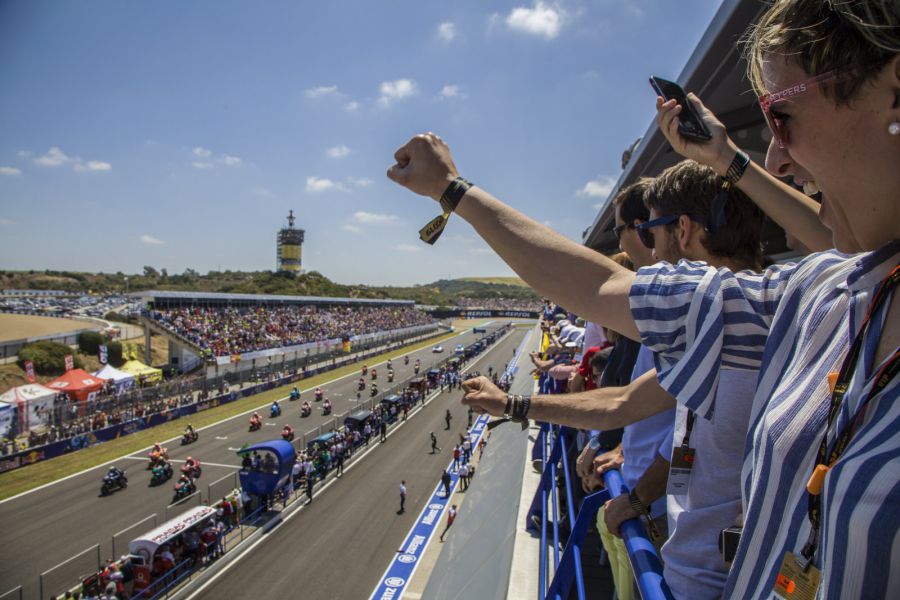
Rather than being defined by any single signature event in the verified record provided, Jerez’s historical weight comes from its steady accumulation of important moments and commemorations. Notable among these is the formal renaming of the circuit to Circuito de Jerez–Ángel Nieto in May 2018, a clear acknowledgement of Spain’s motorcycle heritage and the track’s connection to national legends. More recent heritage activity includes anniversary commemorations that celebrate the circuit’s decades-long relationship with world championship racing.
The circuit in the changing MotoGP calendar
Jerez has been one of the most frequently used venues in the motorcycle world championship calendar. Its continuity—hosting the Spanish Grand Prix for many years—and its favourable winter climate have made it a natural choice not only for race weekends but also for winter and early-season testing. That testing role reinforced Jerez’s calendar importance by keeping teams and riders familiar with the venue outside race weekends, and by making it a practical location for pre-season work.
What the track came to represent
Over time the Circuito de Jerez–Ángel Nieto came to represent a blend of tradition and utility. It is simultaneously a celebrated race venue with a distinctive mix of corners and an indispensable testing ground because of its climate and representative corner types. The renaming to honour Ángel Nieto signalled the circuit’s cultural placement within Spanish motorcycle heritage, while its repeated use in the world championship underscored its sporting relevance.
What its history now means
Jerez’s trajectory—from construction in 1985, through its integration into Grand Prix racing in the late 1980s, to its renaming and anniversary commemorations—tells a story of steady adaptation rather than dramatic reinvention. The venue has preserved its technical identity while remaining compliant with international standards and useful as a testing venue. In doing so it has secured a long competitive life and a respected place in MotoGP history.
Author: Eric M.