KTM MotoGP: tracing the project's trajectory from ambition to podium contention
KTM's entry into MotoGP represents one of the most deliberate modern examples of a manufacturer building a Grand Prix project from the ground up. The story is less about a single machine and more about a sustained factory effort: a stepwise commitment that moved KTM from ambitious newcomer to a team regularly challenging the established frontrunners.
Summary
This article follows KTM's MotoGP project in chronological terms: its origins in factory ambition, the establishment of an early identity, the first competitive gains and limits, rider-driven development phases, key technical and strategic turning points, and what the project's evolution means within modern MotoGP.
Quick preview
- How a factory racing philosophy shaped long-term development.
- Major turning points that shifted KTM's competitive prospects.
- Why the project's trajectory matters for MotoGP's competitive landscape.
Explore
Origins of the project
KTM's MotoGP project grew out of a multilevel strategy: the brand wanted top-level road-racing credibility, a research-and-development platform for technology transfer, and a global marketing presence in premier-class motorcycle racing. Rather than entering MotoGP as a one-off effort, the manufacturer treated the category as a long-term objective requiring infrastructure, a dedicated factory team, and staged investment.
The early phase focused on establishing an organization that could sustain continuous development: hiring specialist engineers experienced in prototype racing, structuring a factory effort distinct from KTM's off-road roots, and committing to the cadence of MotoGP testing and updates. From the outset, the project was about building a competitive prototype programme rather than leveraging an existing roadbike as a short-term marketing stunt.
Early identity
In its first competitive years the KTM MotoGP presence projected an identity defined by ambition and caution at once. The project emphasized agility and an understanding that progress would be incremental. Early identity markers included a focus on chassis balance and a focus on establishing a reliable aerodynamic and electronic baseline.
This period was also characterised by learning: interpreting tyre behaviour at premier-class levels, matching power delivery to rider needs, and integrating MotoGP electronics and data systems into the team’s development loop. Those foundational choices shaped how KTM approached upgrades and rider selection in subsequent seasons.
First breakthroughs or early limits
As the team accumulated track time and race experience, clear signs emerged of both promise and constraint. Breakthroughs took the form of occasional strong qualifying performances and races where the bike’s chassis and agility paid off. Limits showed up in engine development ceilings, tyre management over race distance, and the customary gap in veteran MotoGP savoir-faire compared with long-established factories.
These early results created a realistic roadmap: concentrate resources on the most productive development avenues, and accept that some performance gaps would take multiple seasons and iterative upgrades to close.
Riders and development eras
Riders played a central role in shaping KTM's project. The team’s approach combined recruiting experienced MotoGP competitors and nurturing riders capable of working closely with engineers. Different riders signalled different development emphases: some brought feedback that accelerated chassis and suspension evolution, while others demanded power delivery and electronics refinement.
Over time, rider eras became visible as the project shifted from collecting baseline data to refining race-specific setups. The exchange between rider feedback and engineering responses solidified KTM's development cycle: testing led to targeted upgrades which in turn allowed riders to push further, creating a virtuous loop of improvement.
Technical and strategic turning points
Certain strategic decisions marked distinct turning points in KTM's MotoGP timeline. The team moved from conservative, stability-first updates to more assertive technical steps when the resource base and testing knowledge justified it. In practice, this meant prioritising developments that delivered measurable lap-time gains—chassis geometry changes, revised suspension layouts, and iterative aerodynamic refinements—while matching those upgrades with focused engine work and electronics tuning.
Strategically, the factory also adjusted its programme to accelerate development: increasing test mileage, consolidating data analysis workflows, and strengthening partnerships with tyre and electronics suppliers. Those changes shortened the path from concept to on-track validation and shifted the team from being a development-led outsider to a consistent midfield challenger.
Competitive highs and lows
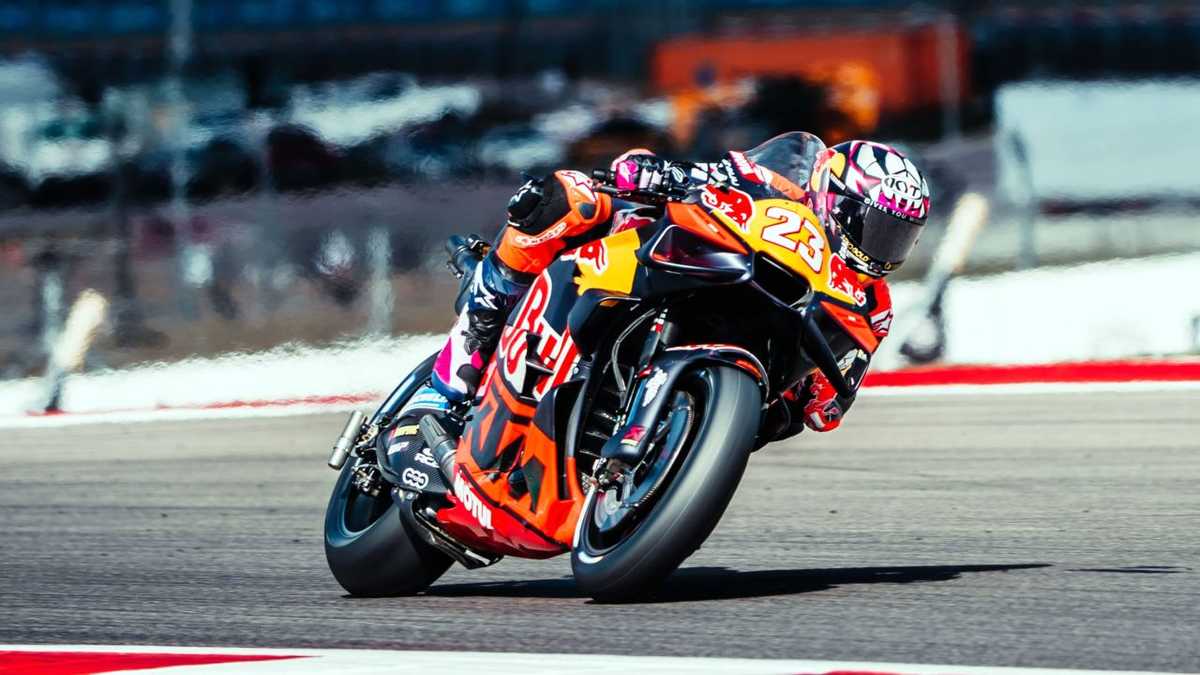
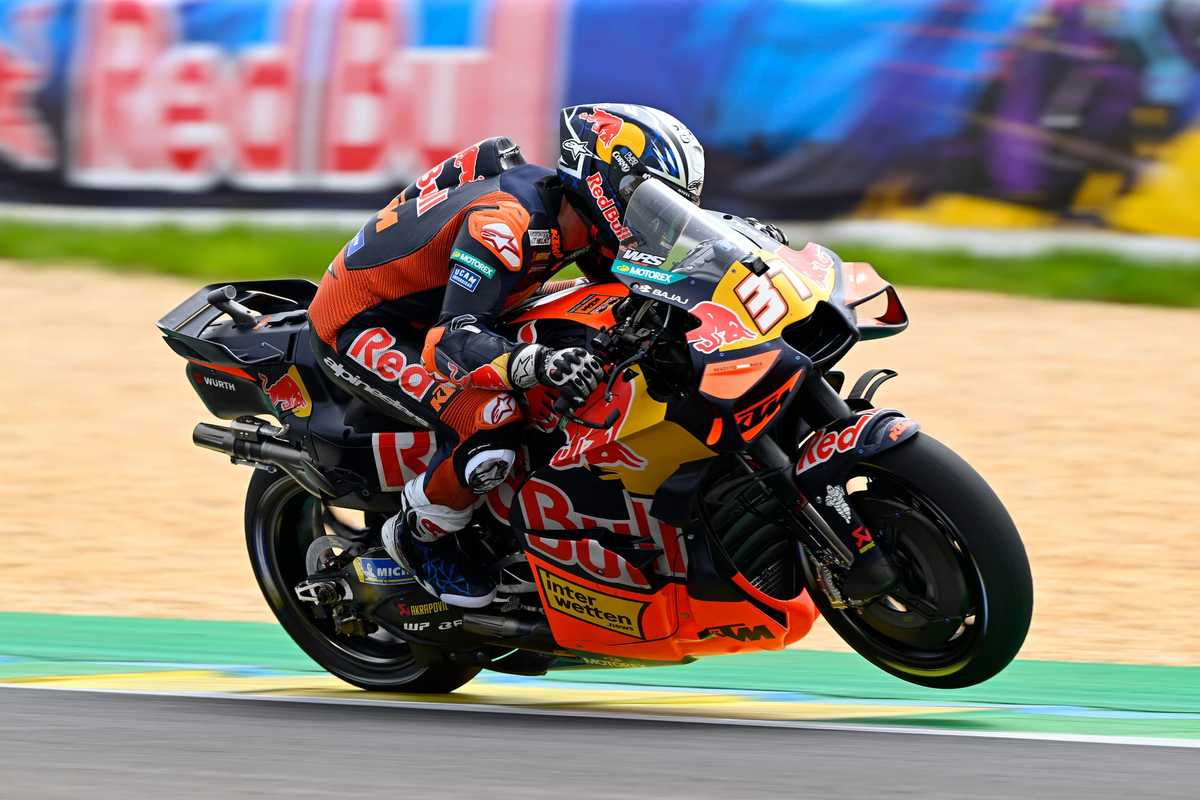
KTM’s progression featured alternating stretches of notable highs and pragmatic lows. Highs were occasions where the bike’s strengths—chassis balance and corner speed—translated into strong race finishes and podium contention. Lows were the expected setbacks: reliability issues, races where engine deficit or tyre degradation exposed the remaining gap to front-runners, and transitional seasons when significant upgrades required adaptation time.
These peaks and troughs are typical of manufacturer projects that scale quickly: visible gains arrive alongside new challenges, and the measure of the project is how effectively the team converts occasional strong results into regular competitiveness.
The bike in the wider MotoGP context
KTM’s MotoGP project can be read as part of a broader competitive evolution in the series. It demonstrated how a focused factory programme, even from a brand with deep off-road heritage, can become a benchmark in prototype development. The project’s trajectory highlighted the importance of sustained testing, smart rider recruitment, and the interplay between chassis philosophy and electronics management in the modern MotoGP era.
By challenging established manufacturers, the KTM project contributed to a more diverse competitive field and underscored that sustained investment and clear strategic priorities can reshape expectations in premier-class racing.
What its history now means
Looking back, KTM’s MotoGP story is significant for what it teaches about long-term factory projects in Grand Prix racing. The journey from ambitious entry to regular podium contender was not linear: it required accepting incremental progress, making decisive technical and organisational shifts, and allowing riders and engineers to co-develop the machine over multiple seasons.
The project leaves a legacy beyond its immediate results. It shows that modern MotoGP is open to new factory challengers who can marry resources with clear development philosophy. For fans and industry observers, KTM’s path reinforces that durable competitiveness is built on repeated cycles of testing, honest assessment, and targeted upgrades rather than dramatic one-season transformations.
Author: Cynthia D.