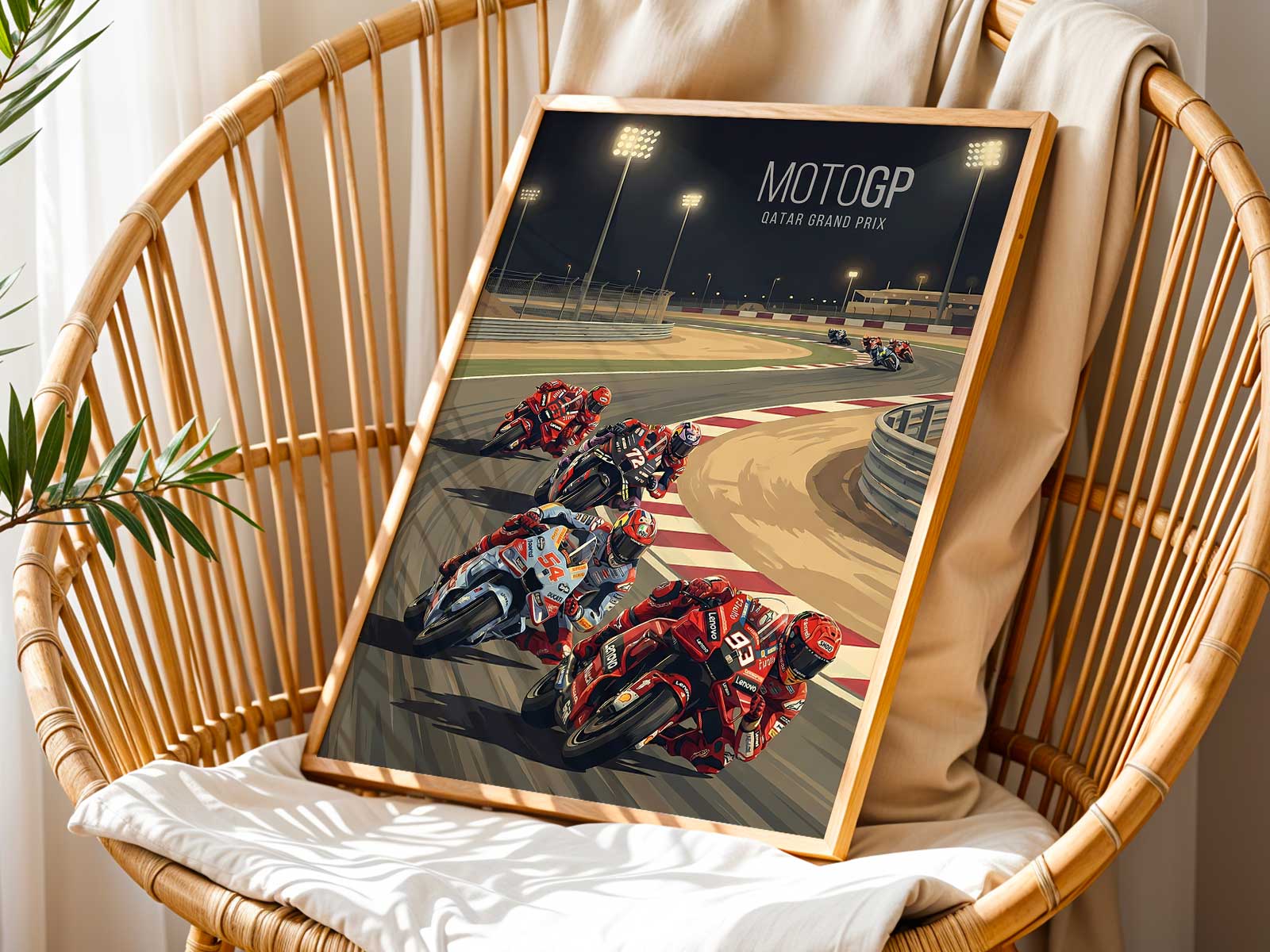
MotoGP knee down explained: why riders put a knee on the track
When you see a MotoGP rider scrape a knee across the asphalt it looks dramatic — but it is primarily a functional racing tool. Knee contact, supported by protective knee sliders and a specific ‘‘hanging off’’ body position, gives the rider tactile feedback on lean angle, shifts the centre of gravity, and helps manage braking, turn-in and exit. This explainer walks through what knee-down means in MotoGP terms and why it matters for feel, bike balance and safety.
Quick summary: Knee-down is not showmanship. Riders use knee sliders to contact the track as a precise sensor for lean angle and to enable body position that reduces the motorcycle's lean for a given cornering speed, while the sliders protect leathers and skin from abrasion.
Quick access: Definition • How it works • Rider technique
CLEAR DEFINITION
In MotoGP, "knee down" refers to moments when a rider deliberately places their knee (covered by a hard knee slider) in contact with the track surface while cornering. The contact is a trained part of racing posture and serves as a tactile cue and protective contact point rather than an aesthetic flourish.
HOW IT HAPPENS AND WHY IT HELPS
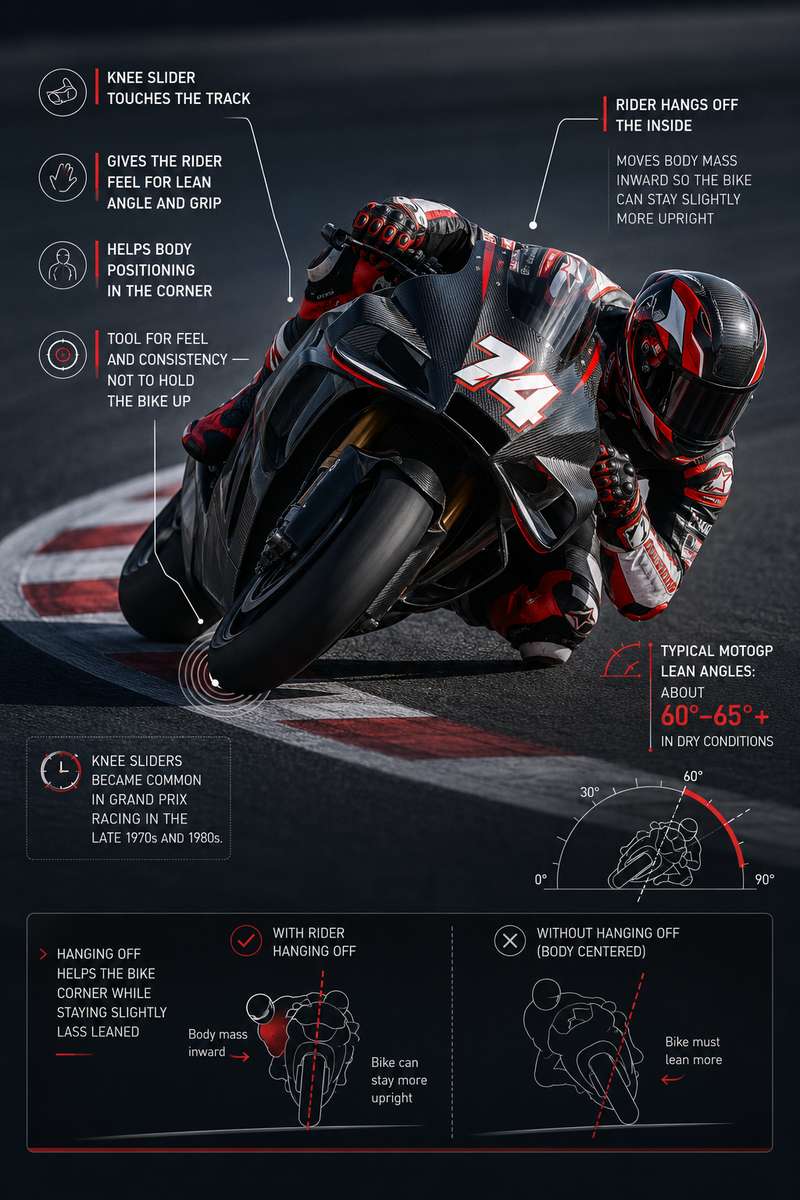
Knee contact provides direct, simple information: it tells a rider approximately how much the bike is leaning. That tactile feedback complements what the rider feels through the chassis, tyres and body. Using the knee as a sensor helps riders judge the lean angle and the proximity of the tyre limits without relying only on visual or subtle chassis sensations.
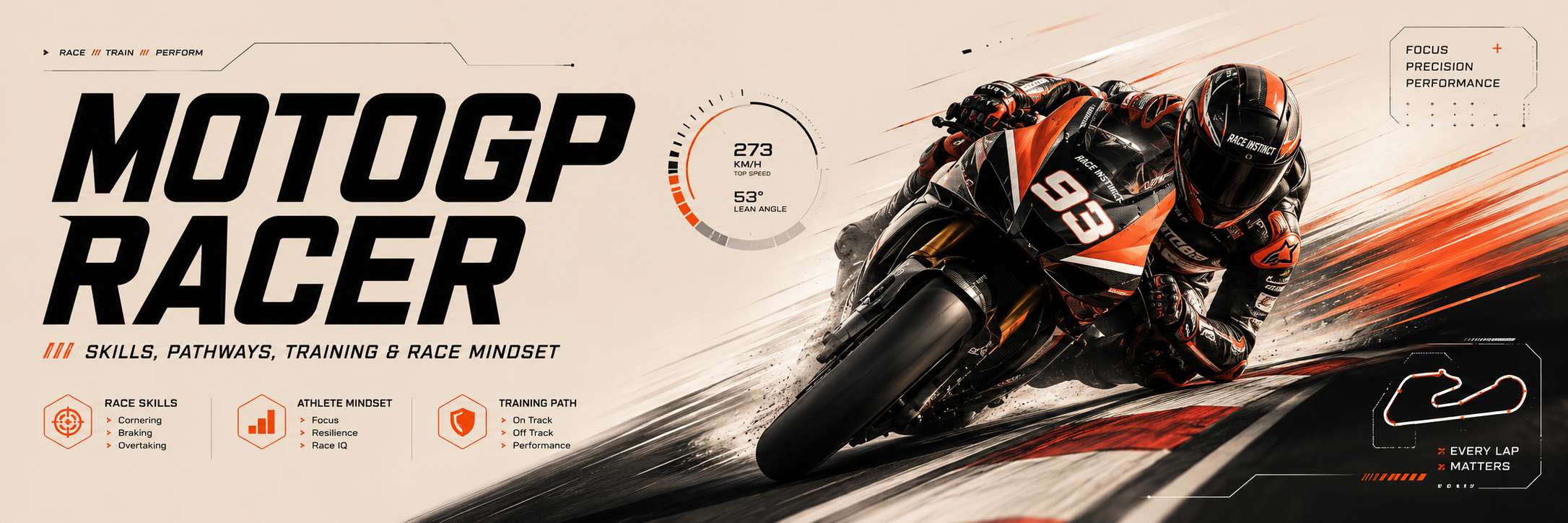
More than a sensor, the knee is integral to body positioning. By hanging off the bike and shifting their mass inside the corner, riders move their centre of gravity inward. This allows the motorcycle to achieve the same cornering speed with a reduced machine lean angle, which can increase available grip and change tyre load patterns.
RIDER TECHNIQUE
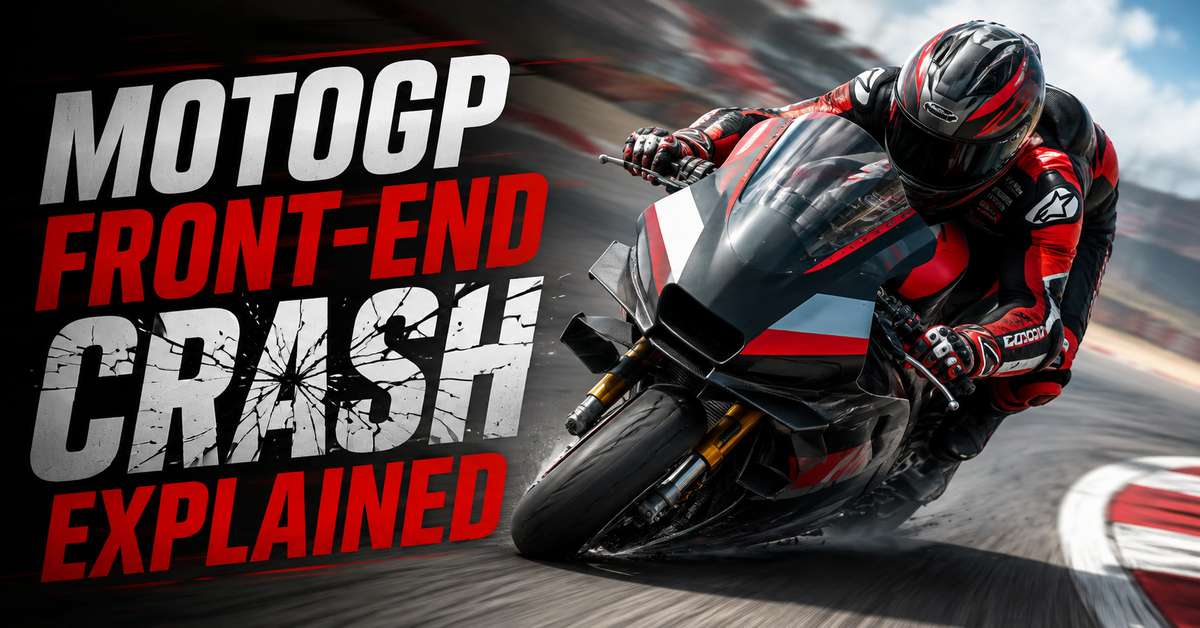
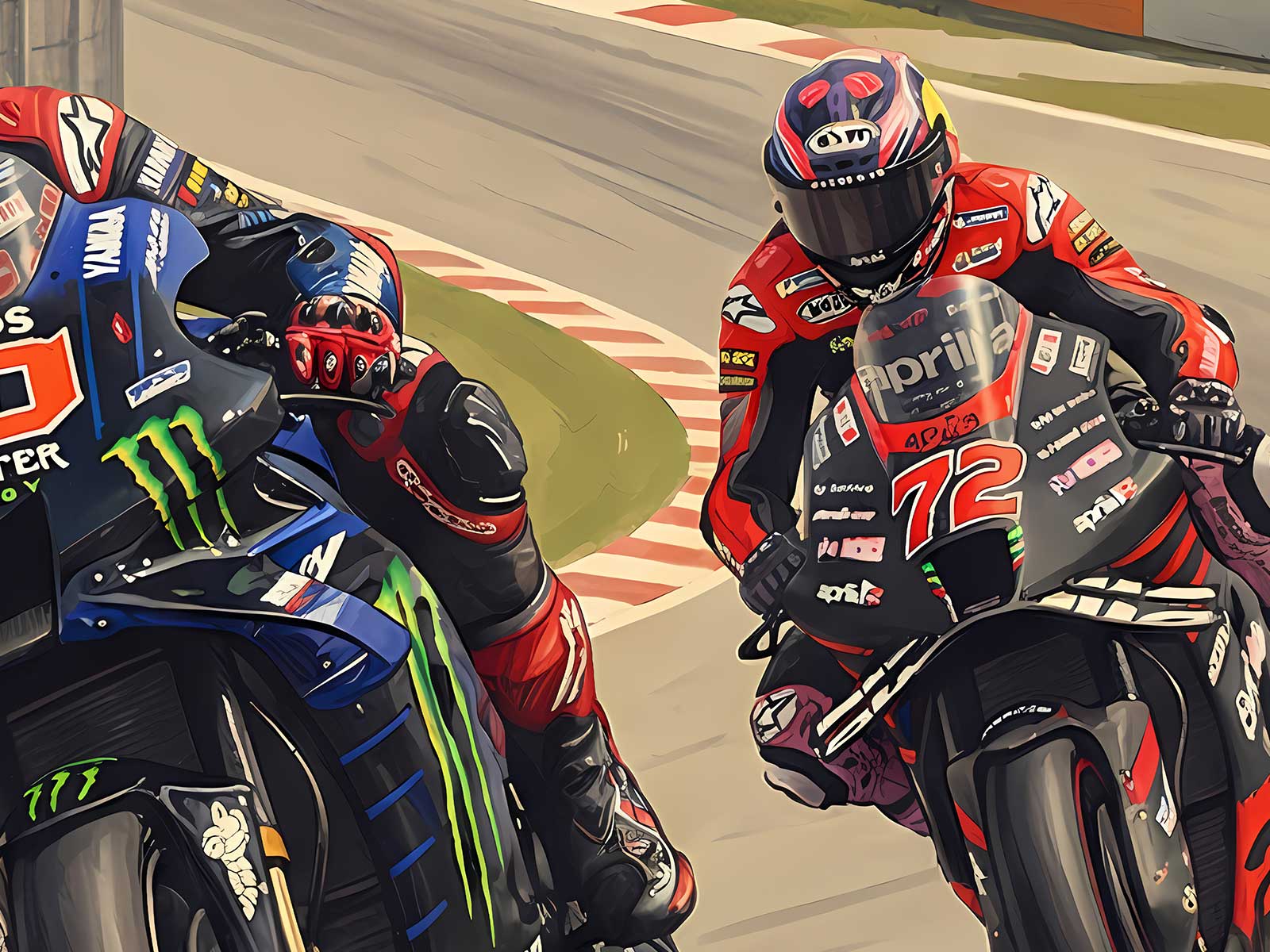
To deploy knee-down effectively riders adopt a hanging-off position: the torso moves toward the inside of the corner, the outside knee clamps the tank and the inside knee drops toward the tarmac. The knee slider, mounted on the leather suit, makes controlled contact with the surface. That contact is timed as the rider settles the bike into the corner, and can be adjusted through small body movements to fine-tune direction and balance.
Riders use the knee to assist in turn-in, hold a line through mid-corner, and prepare for corner exit. The knee helps manipulate the bike’s balance by allowing the rider to use bodyweight as a lever — a subtle, consistent tool to influence front and rear load under braking and acceleration.
BIKE BEHAVIOUR AND TECHNOLOGY
The motorcycle reacts to the rider’s shifted mass and knee contact through changes in load distribution and steering geometry. Reduced machine lean for a given speed alters tyre contact patch orientation and can affect front grip and rear traction. Knee contact itself does not change tyre chemistry or electronics settings, but it helps the rider sense the threshold at which tyres are approaching their grip limits.
Because tyre grip depends on temperature, compound and track conditions, knee contact is one of several inputs a rider uses. Chassis feel, tyre feedback and electronic intervention remain essential; knee feel is an immediate, local cue rather than a comprehensive telemetry substitute.
SAFETY, LIMITS AND MISUNDERSTANDINGS
Knee sliders protect the suit and the rider’s knee from abrasion and small impacts when they touch the surface. That protection makes controlled contact viable at racing speeds. However, beginners sometimes mistake knee scraping as a direct measure of absolute grip. In reality, grip limits vary with conditions and knee contact should not be the sole method for judging traction. Riders are trained to combine knee feel with other sensations to avoid exceeding limits.
Used correctly, knee contact is a safety-minded technique: it helps riders place the bike and manage its balance. Misapplied or over-relied upon, it can give false confidence if track or tyre conditions change rapidly.
RACECRAFT AND PRACTICAL RACE EFFECTS
On track, effective body positioning and knee use influence how a rider brakes into corners, changes direction and accelerates out. By allowing a lower machine lean for the same speed, hanging off with knee contact can preserve tyre life and create alternative lines for overtaking or defence. Teams and riders tune set-up and ergonomics so the rider can use knee contact consistently during a race weekend.
For fans, seeing different riders' knee angles offers a clue to their corner speed, confidence level and setup choices — but it is only one visible element of a complex interaction between rider, bike and tyre.
CLOSING INTERPRETATION
In MotoGP the knee-down image is emblematic, but its value is practical: a tactile sensor, a protective contact point and a lever for body-positioning that together improve feel and allow finer control of the motorcycle. Understanding knee-down helps viewers read cornering behaviour: it is a trained technical tool rooted in physics and rider feedback, not merely dramatic showmanship.
Author: William L.