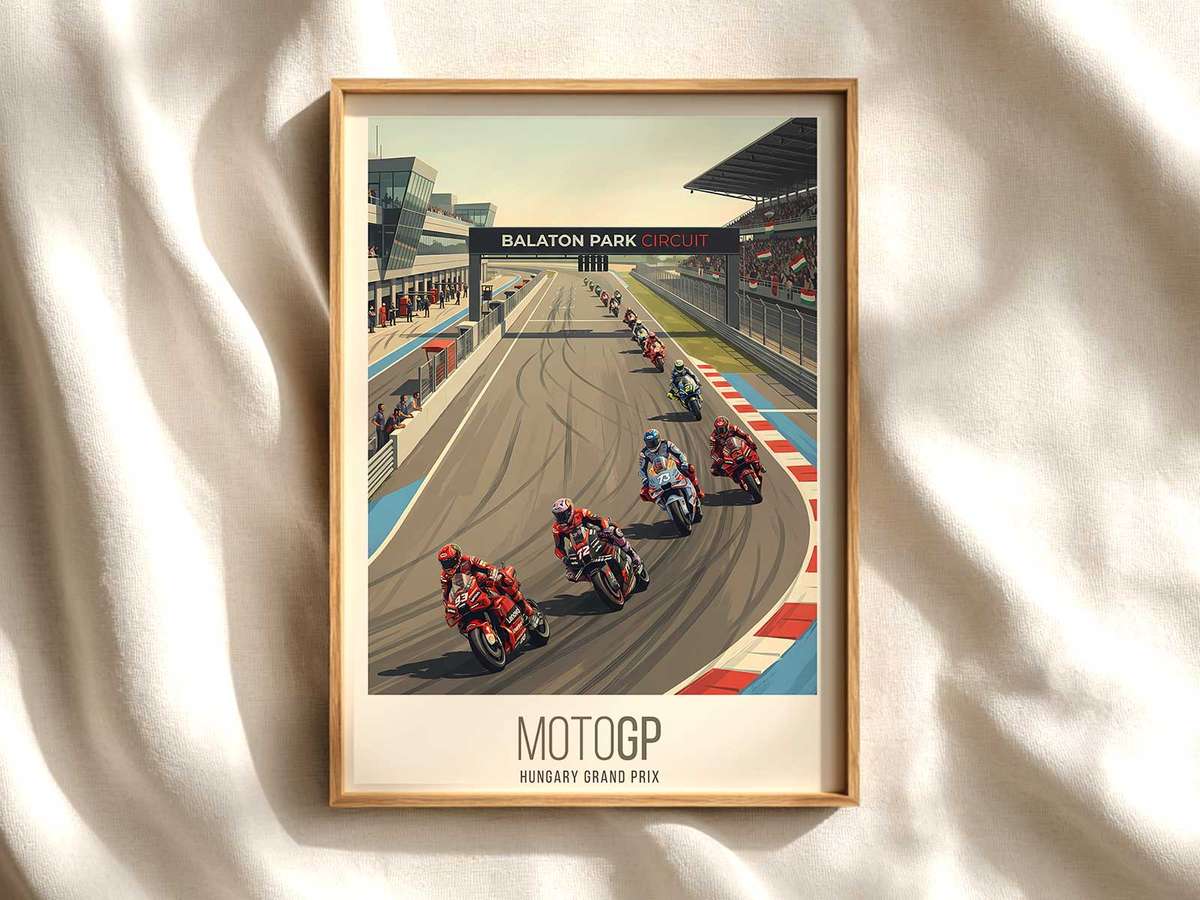
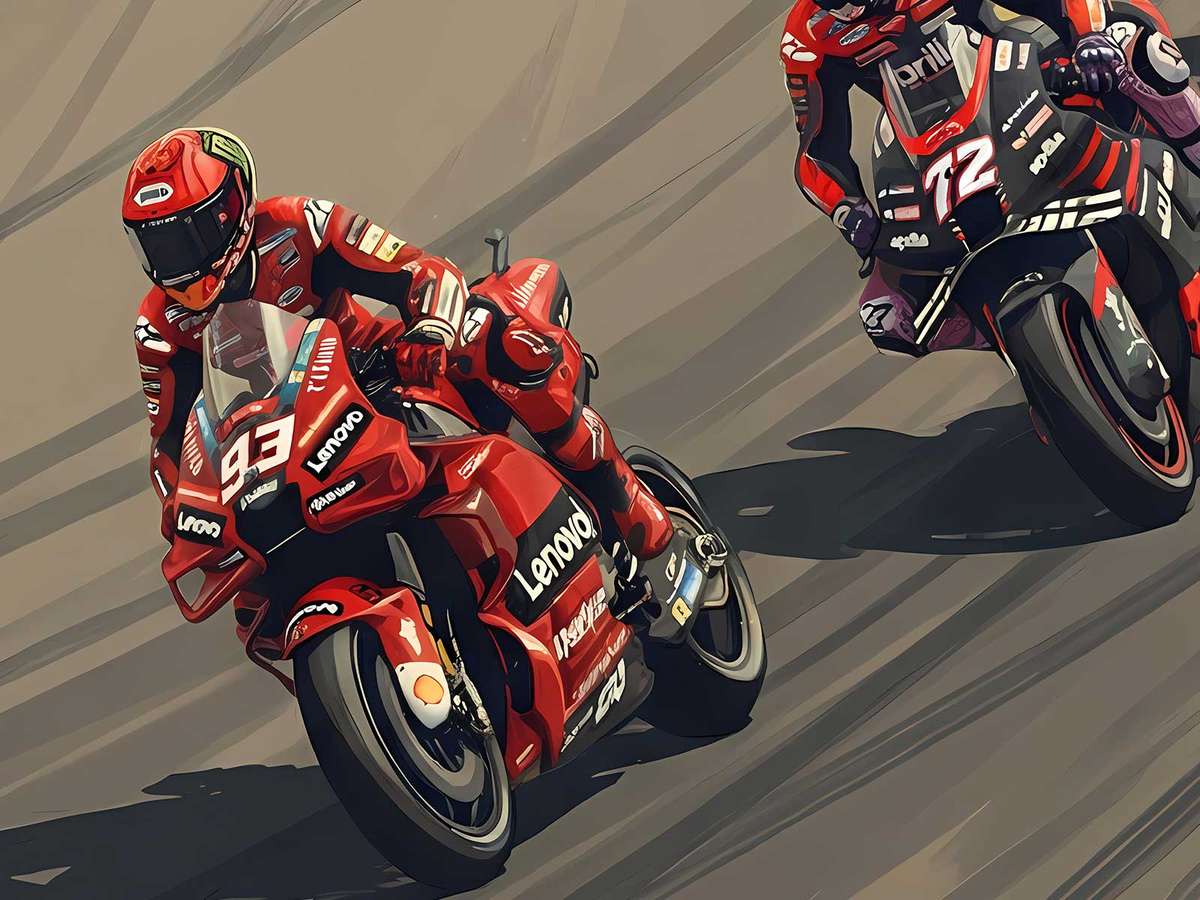
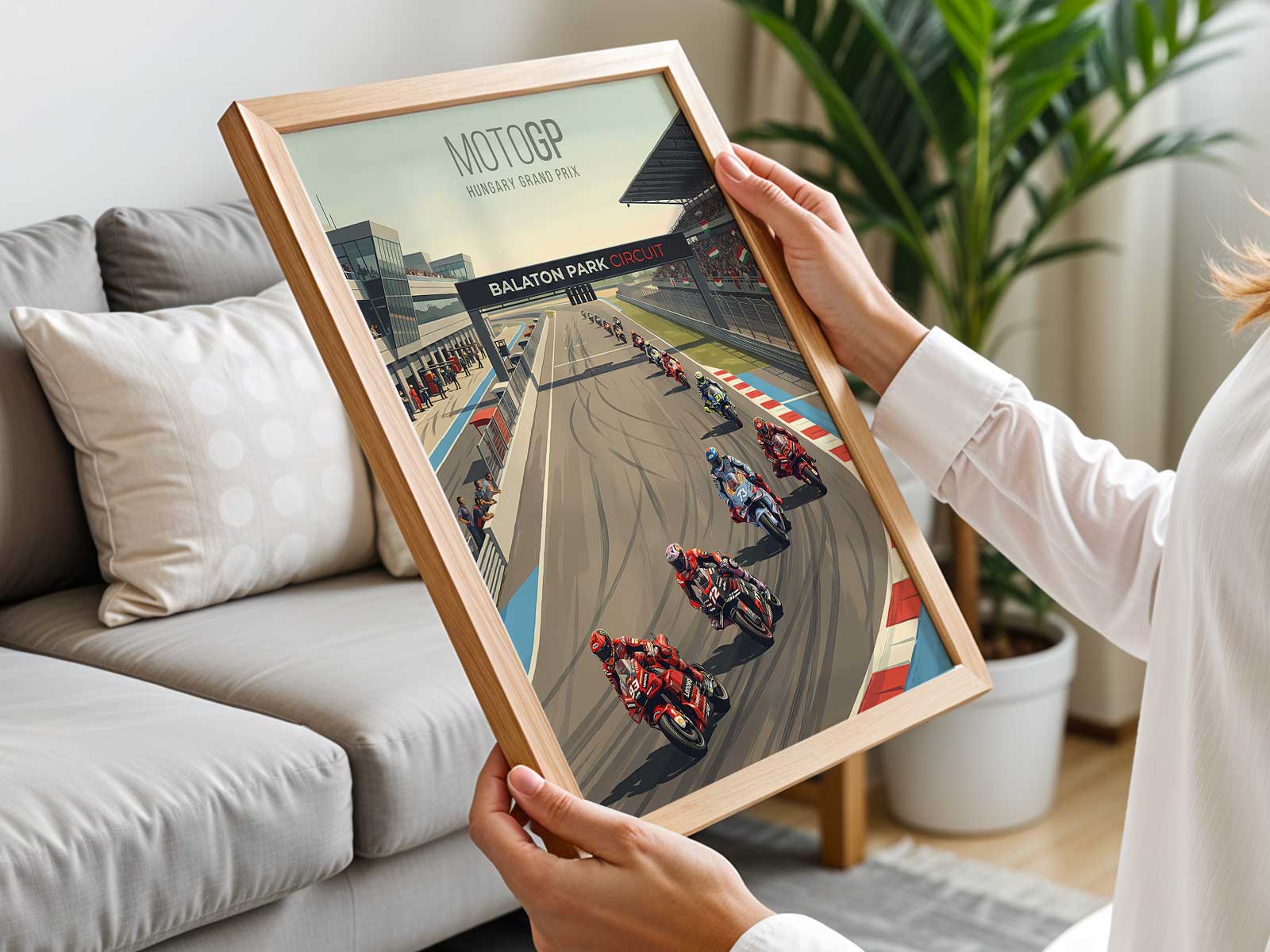
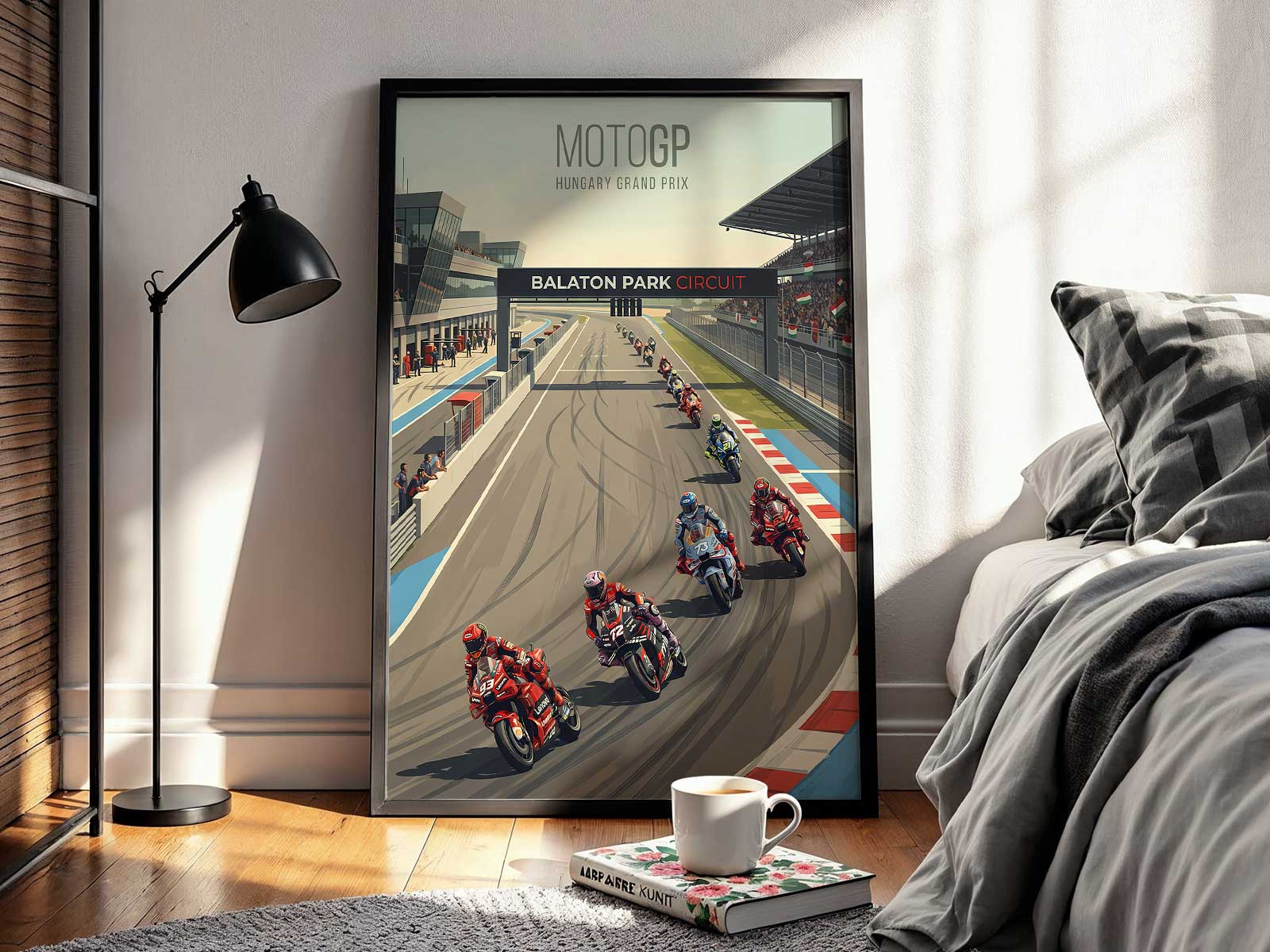
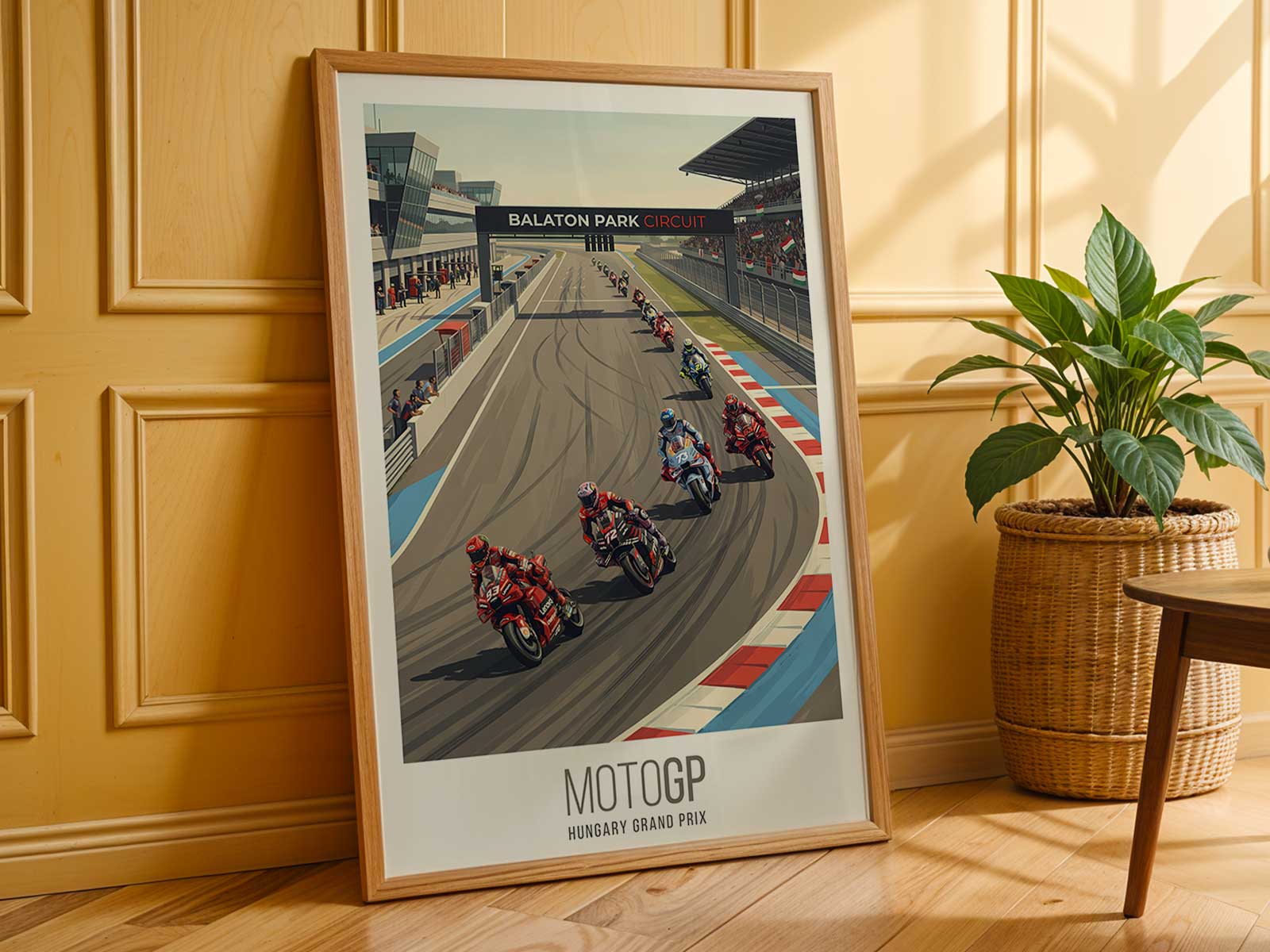
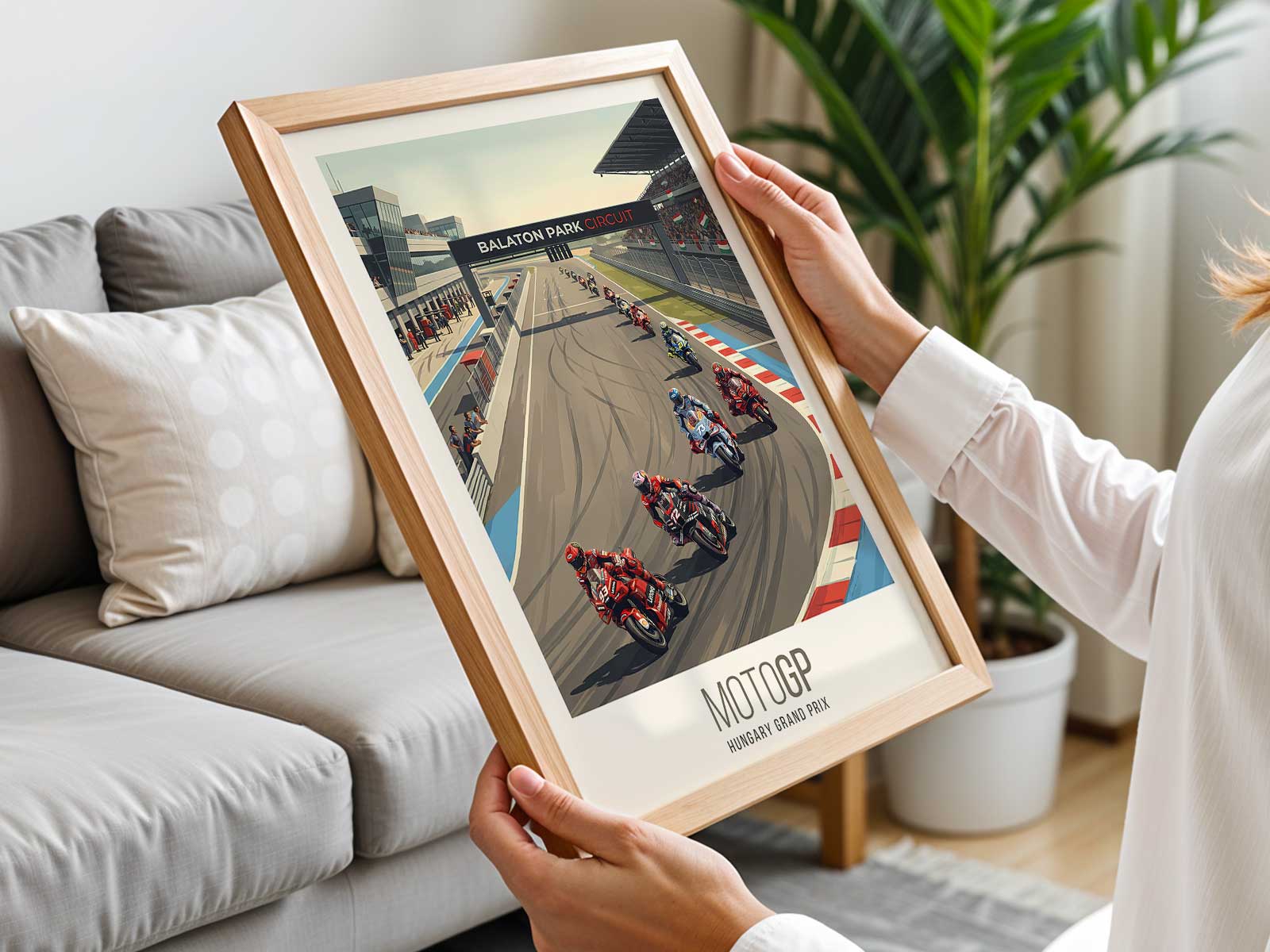
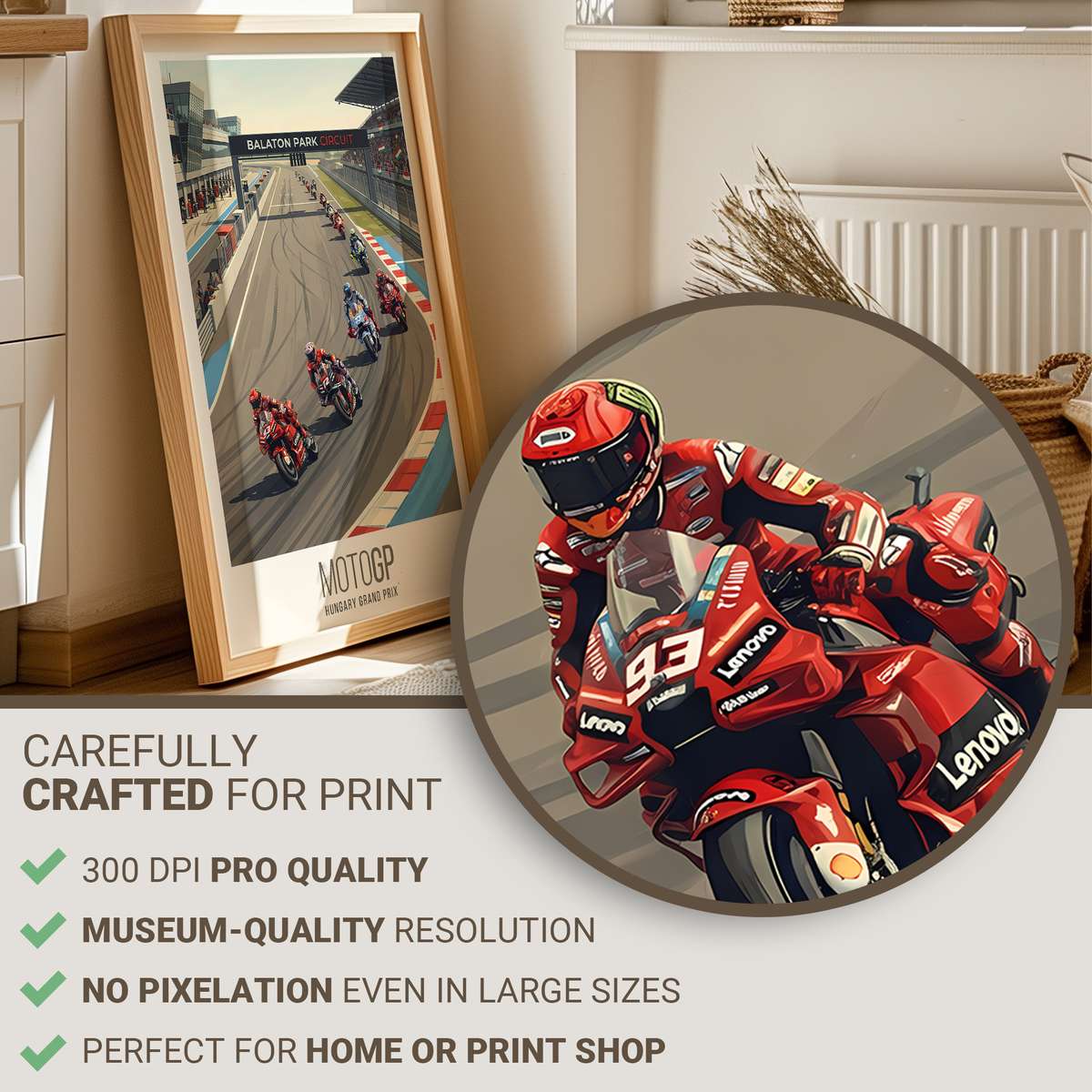
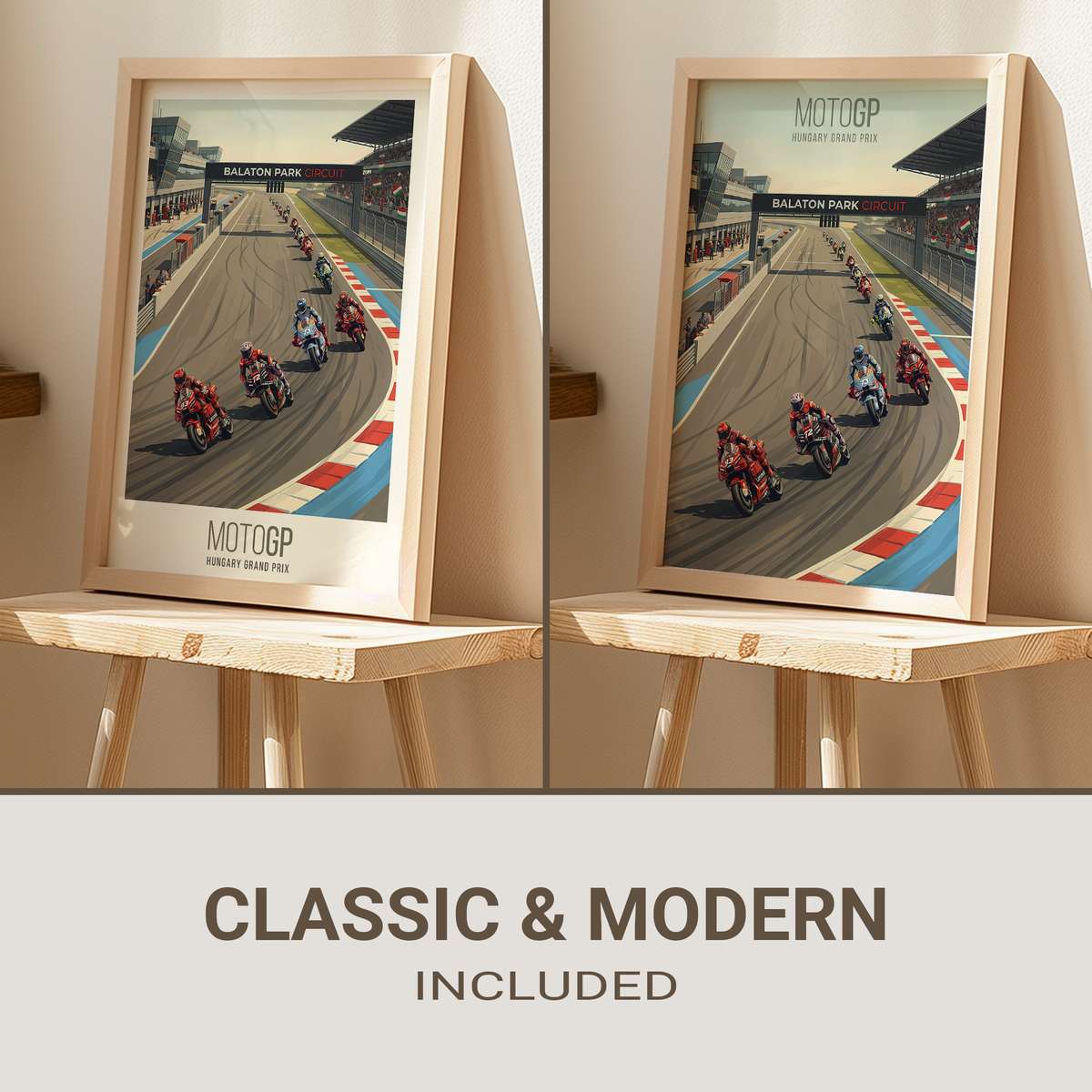
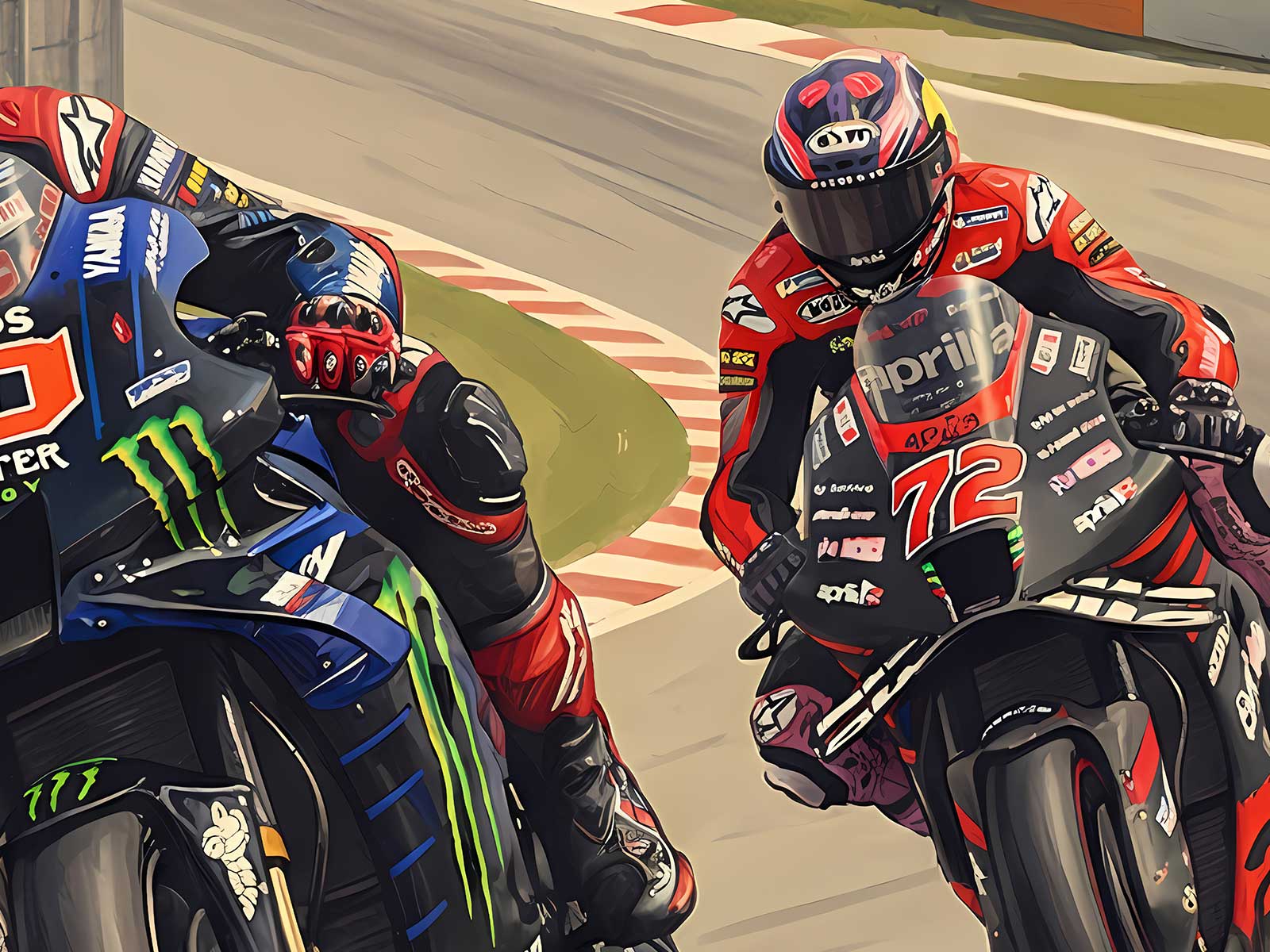
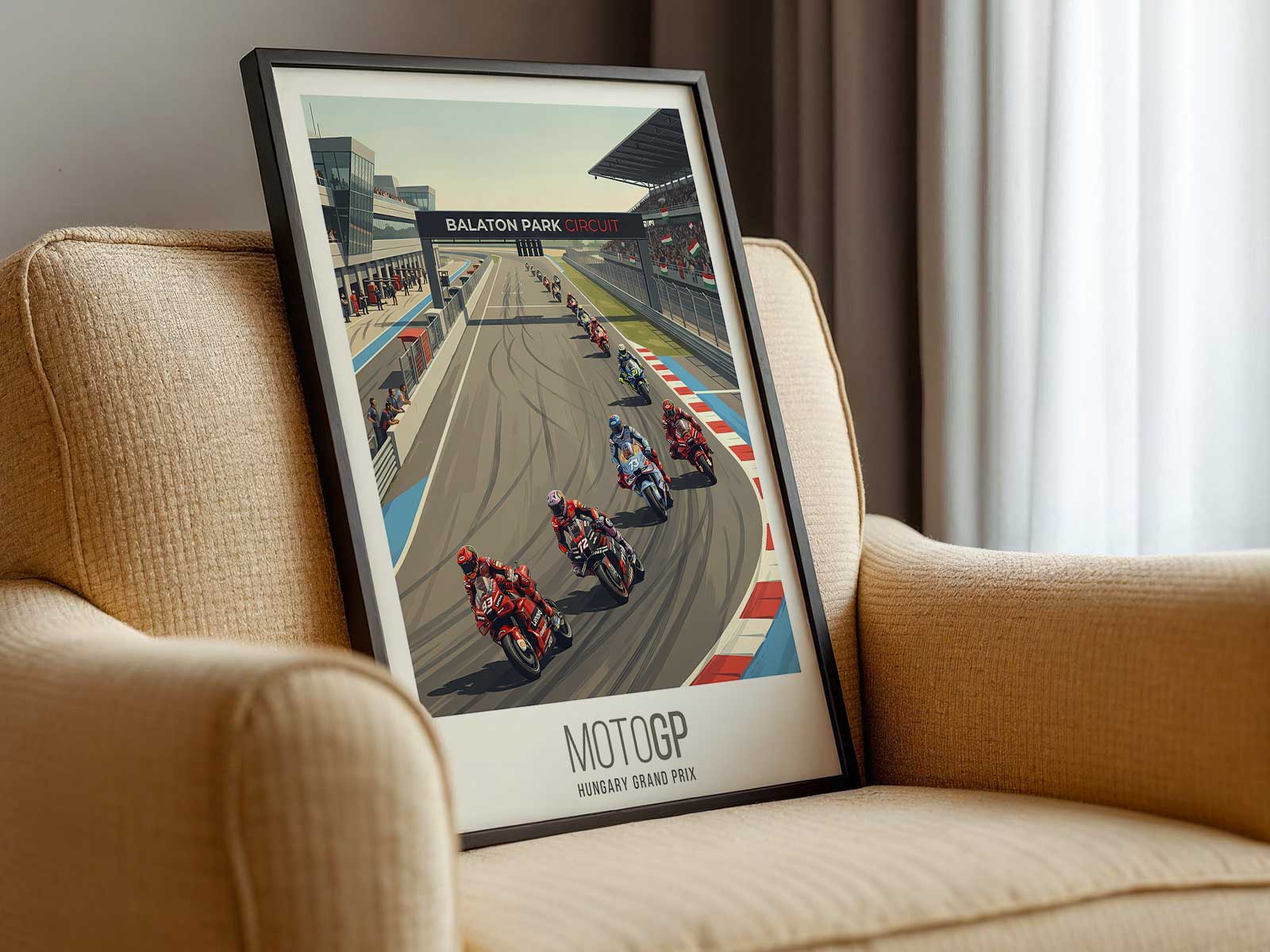
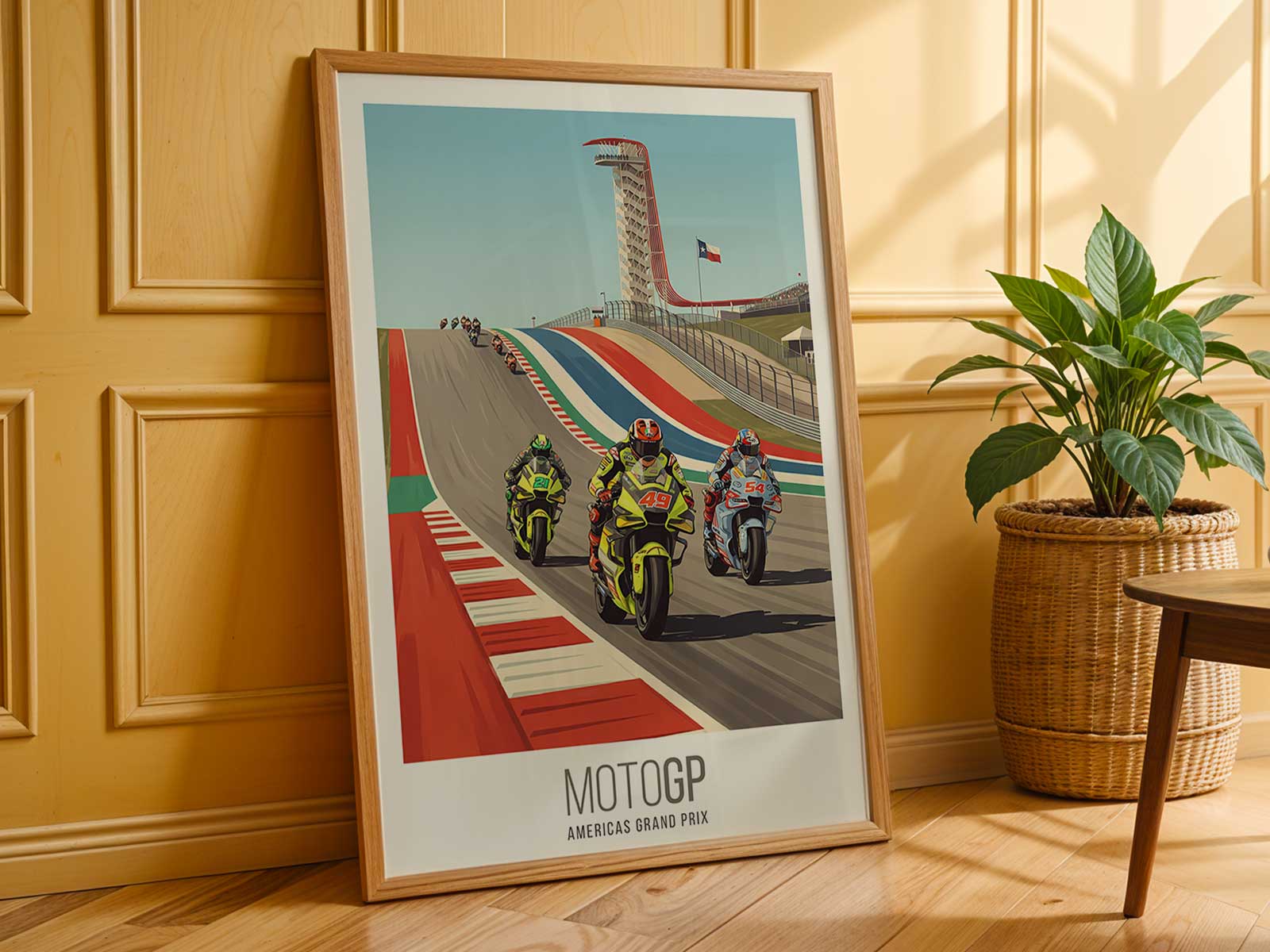
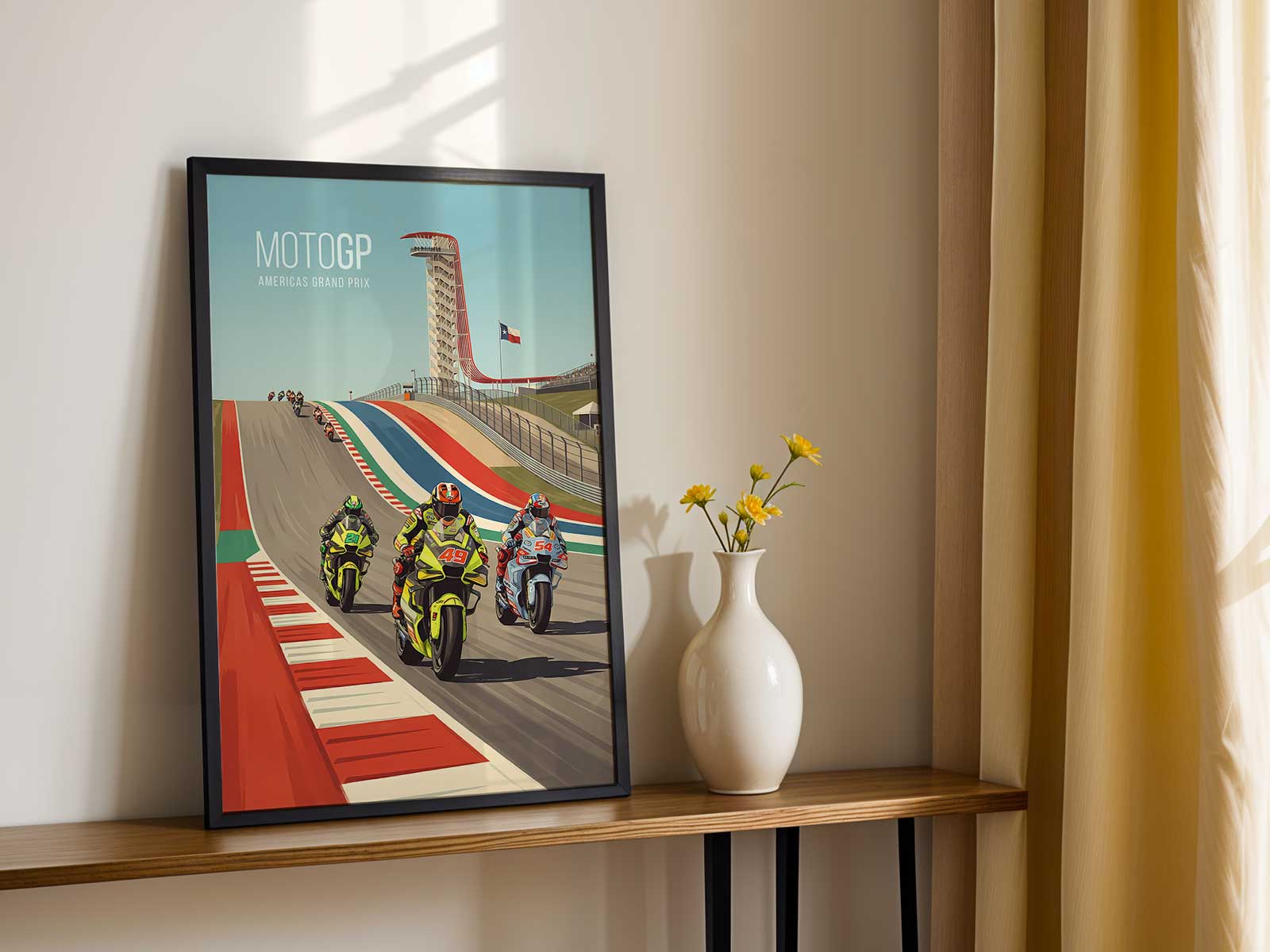
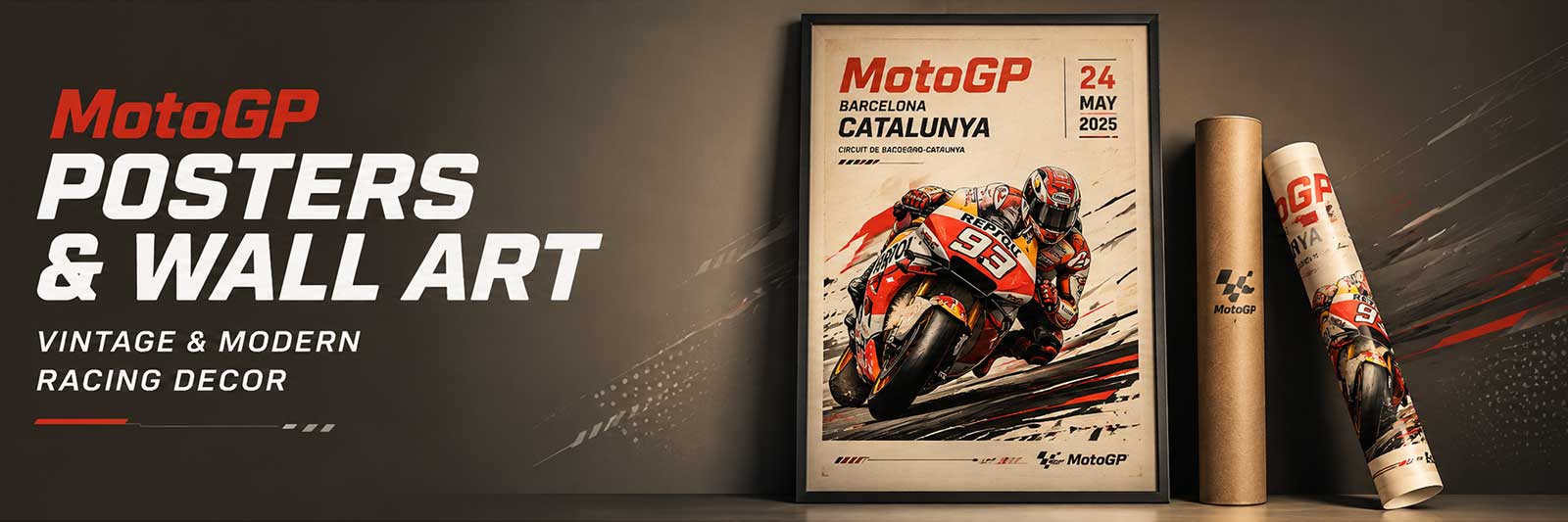
Francesco Bagnaia rendered through a heritage lens becomes more than a portrait of a rider: it transforms into an object of memory. These posters borrow the graphic grammar of older grand prix prints—muted palettes warmed by sun-faded inks, careful type treatments, and the suggestion of grain or paper texture—to make a contemporary champion feel rooted in a lineage of circuits, mechanics and roadside crowds. That sense of age is not merely cosmetic; it creates a visual shorthand for endurance, grit and the rituals of racing that collectors recognise immediately.
What makes a Bagnaia poster read as heritage rather than a fashionable retro trick is less about mimicking a single year and more about evoking era character. A balanced composition might pair the fluid silhouette of a modern racebike with the soft-edge color fields and restrained typography of mid-century motorsport art, implying continuity between machines and men across decades. Warmth in the ink, slight edge wear, and the suggestion of sunlight on aluminum tell the viewer this image belongs to a long-running story of race weekends and pitlane routines.
[IMAGE_INSERT_ARTICLE_01]
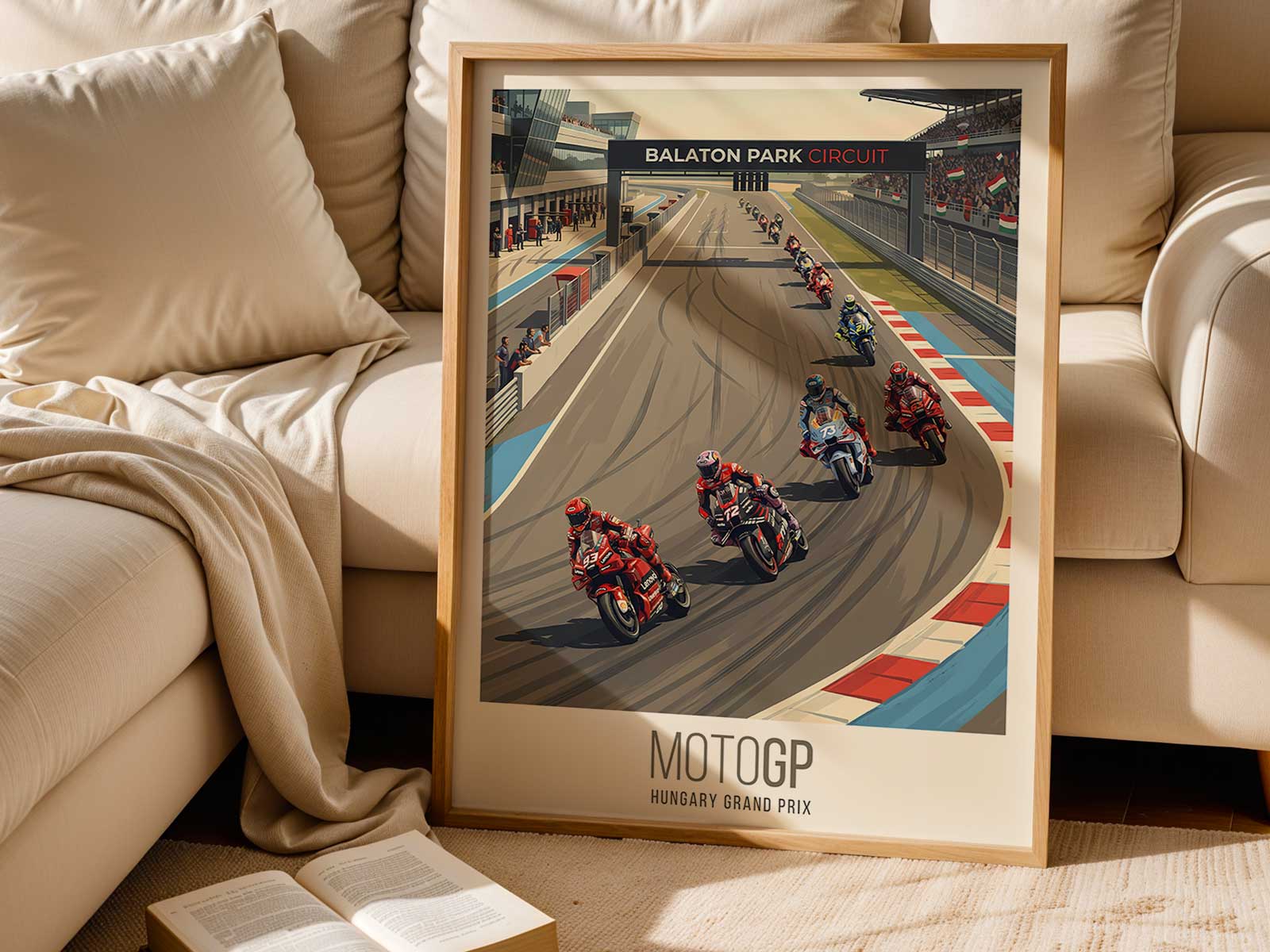
There is a distinct emotional force in heritage-led MotoGP imagery: it asks the viewer to remember as much as to admire. The poster becomes a trigger—of circuits smelled in memory, of the echo of engines under grandstands, of time spent in garages turning spanners. For interiors, that emotional density is valuable. A Bagnaia print hung in an office, studio, garage or library operates like a curated object: not a poster slapped on a wall but a piece that frames a room’s personality, suggesting a collector’s taste for authenticity, lineage and craft.
Design choices that reinforce this reading are subtle. Choosing slightly desaturated reds and ochres, allowing shadow to breathe around the rider, and integrating discreet typographic cues—race name treatments, edition marks or a small publisher’s stamp—creates provenance without shouting. These are the details that persuade a viewer this is heritage art, not a momentary trend, and they reward close inspection: the better the print, the more the wear and tonal depth feel intentional rather than manufactured.
Beyond aesthetics, the cultural depth of older-style MotoGP imagery helps it sit comfortably within domestic and professional interiors. Modern photography can be immediate and spectacular, but heritage visuals offer a different kind of presence: meditative, storied and wearable. A Bagnaia poster with that sensibility balances action with restraint; it is equally at home above a mid-century credenza as it is in a minimalist studio, because the imagery carries narrative weight—of circuits, teams and the rituals that bind fans across generations.
Collectors are drawn to these prints precisely because they function on multiple levels: visual pleasure, sporting homage, and historical resonance. They make tangible the idea that motorcycle racing is an evolving craft tied to place and people. For anyone curating walls with intent, a Francesco Bagnaia poster that leans into retro language and grand prix heritage reads as an investment in atmosphere: a declaration that what hangs on the wall matters to memory as much as to style.
If you want a piece that honors both rider and tradition, look for prints where composition, color and material age work together to suggest continuity rather than pastiche. Those are the posters that age gracefully—alongside the owner—and continue to reward viewers with deeper layers of meaning each time they are seen.