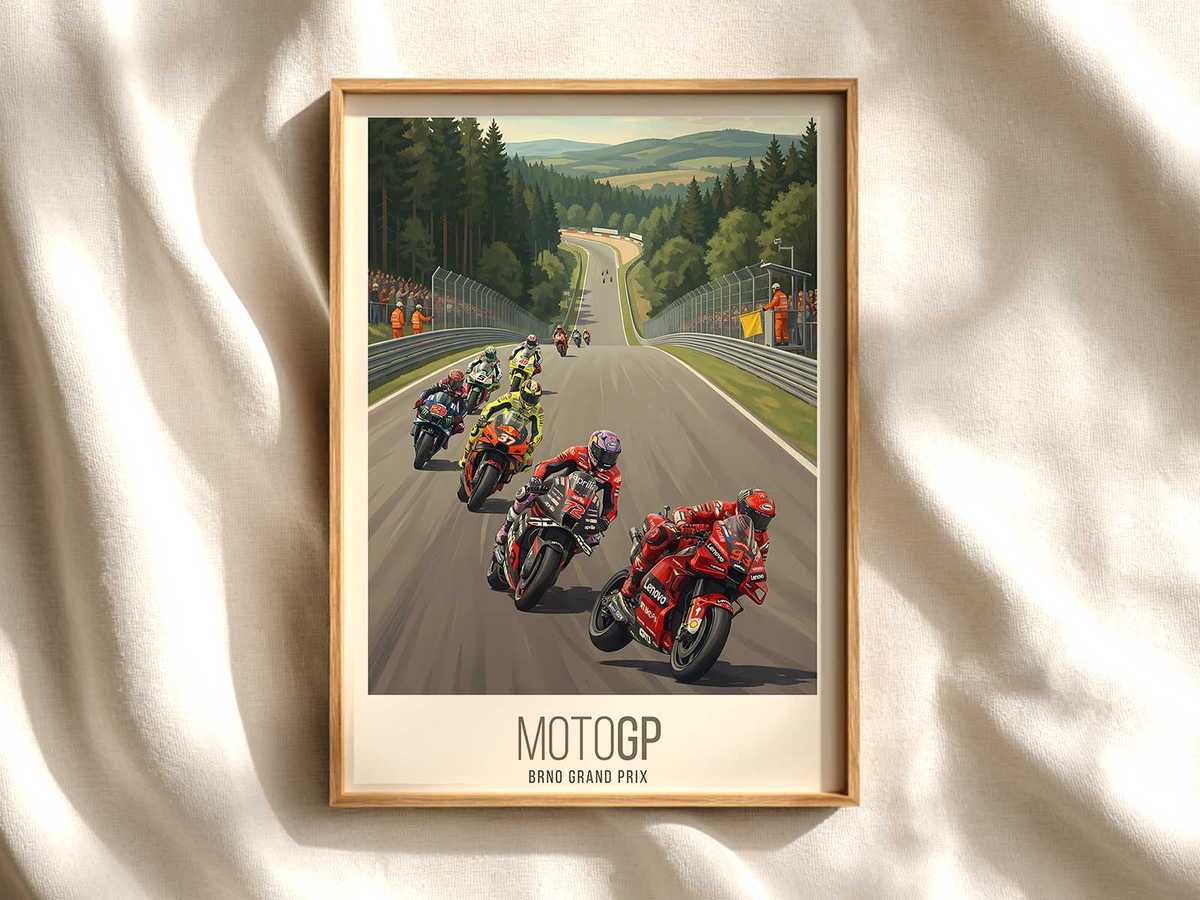
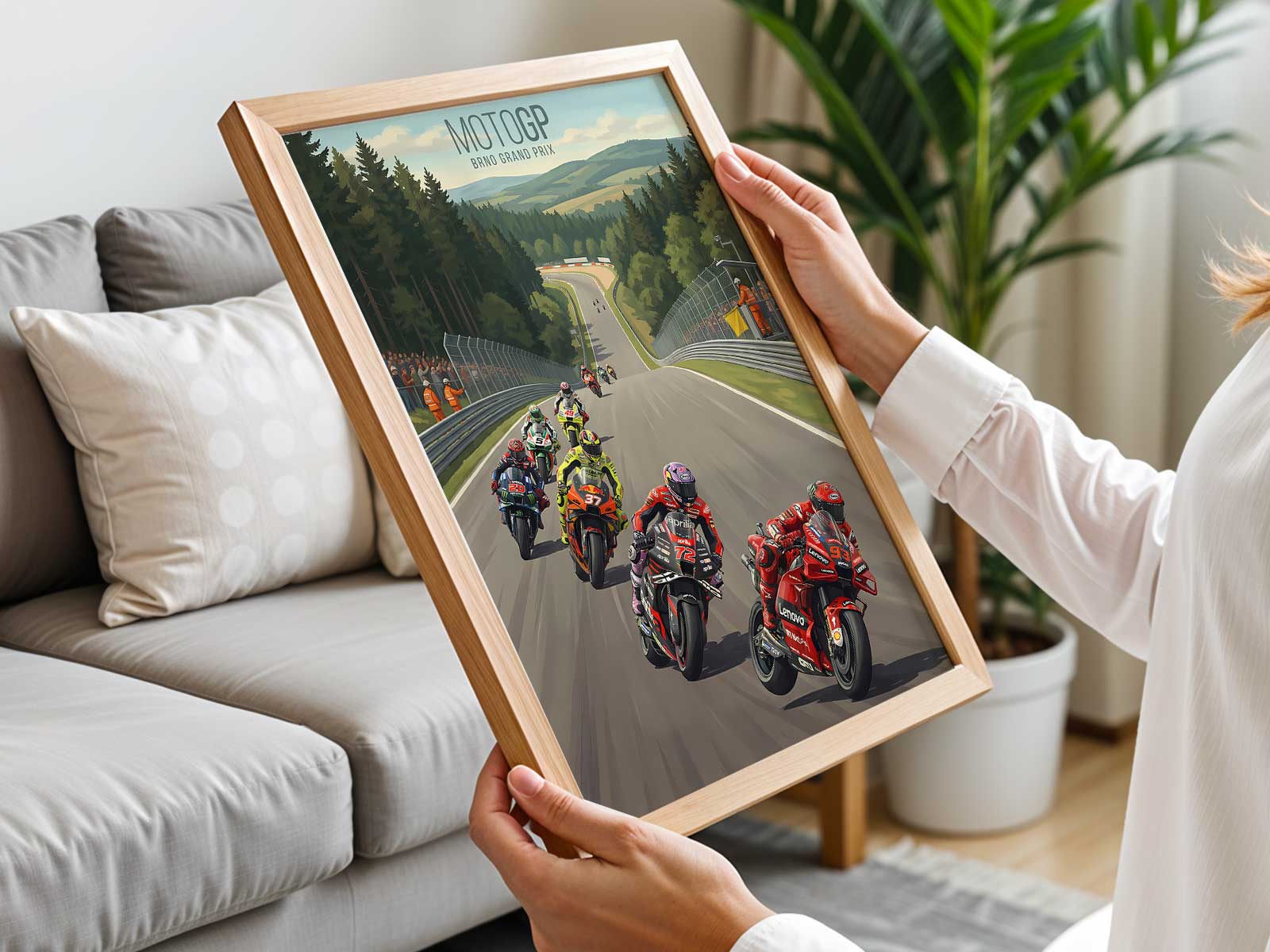
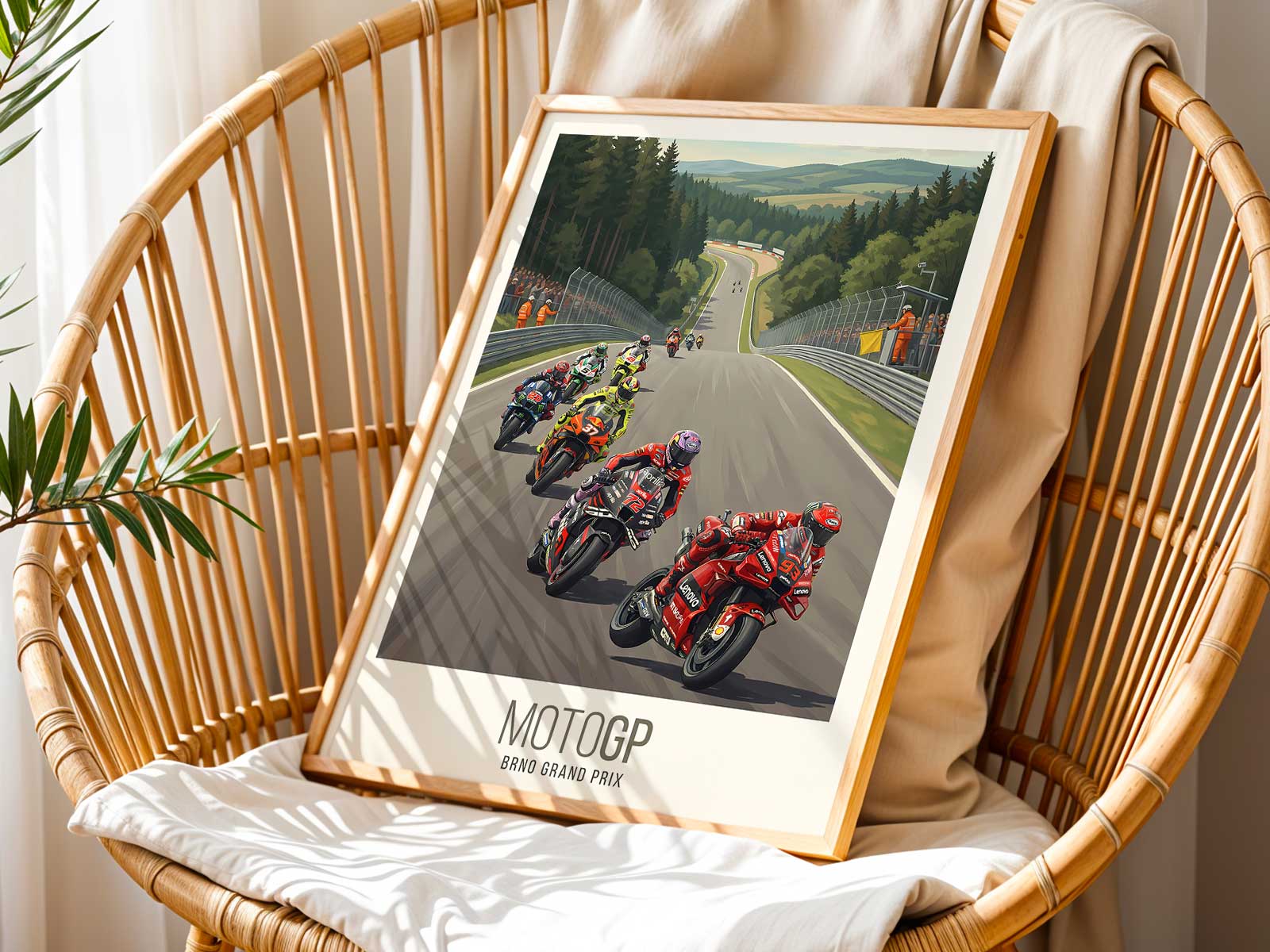
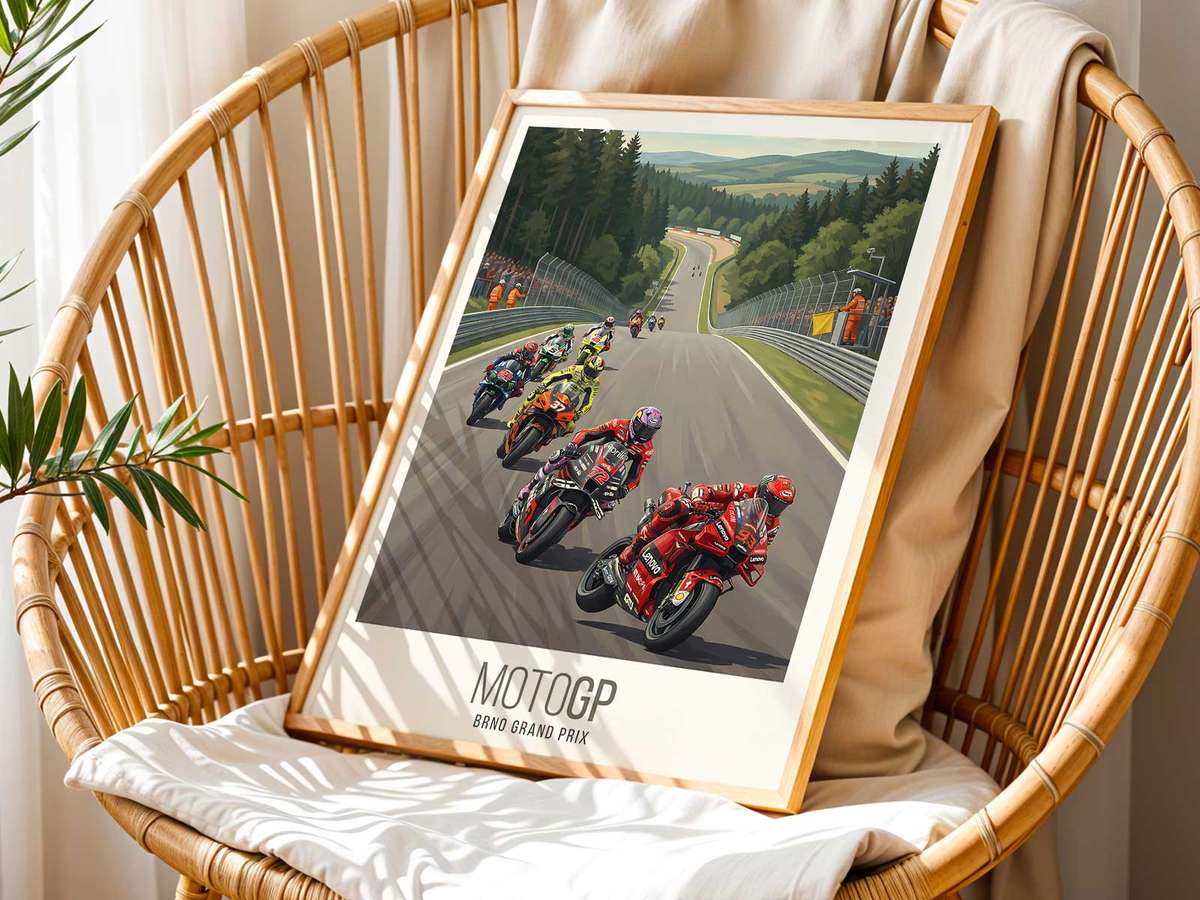
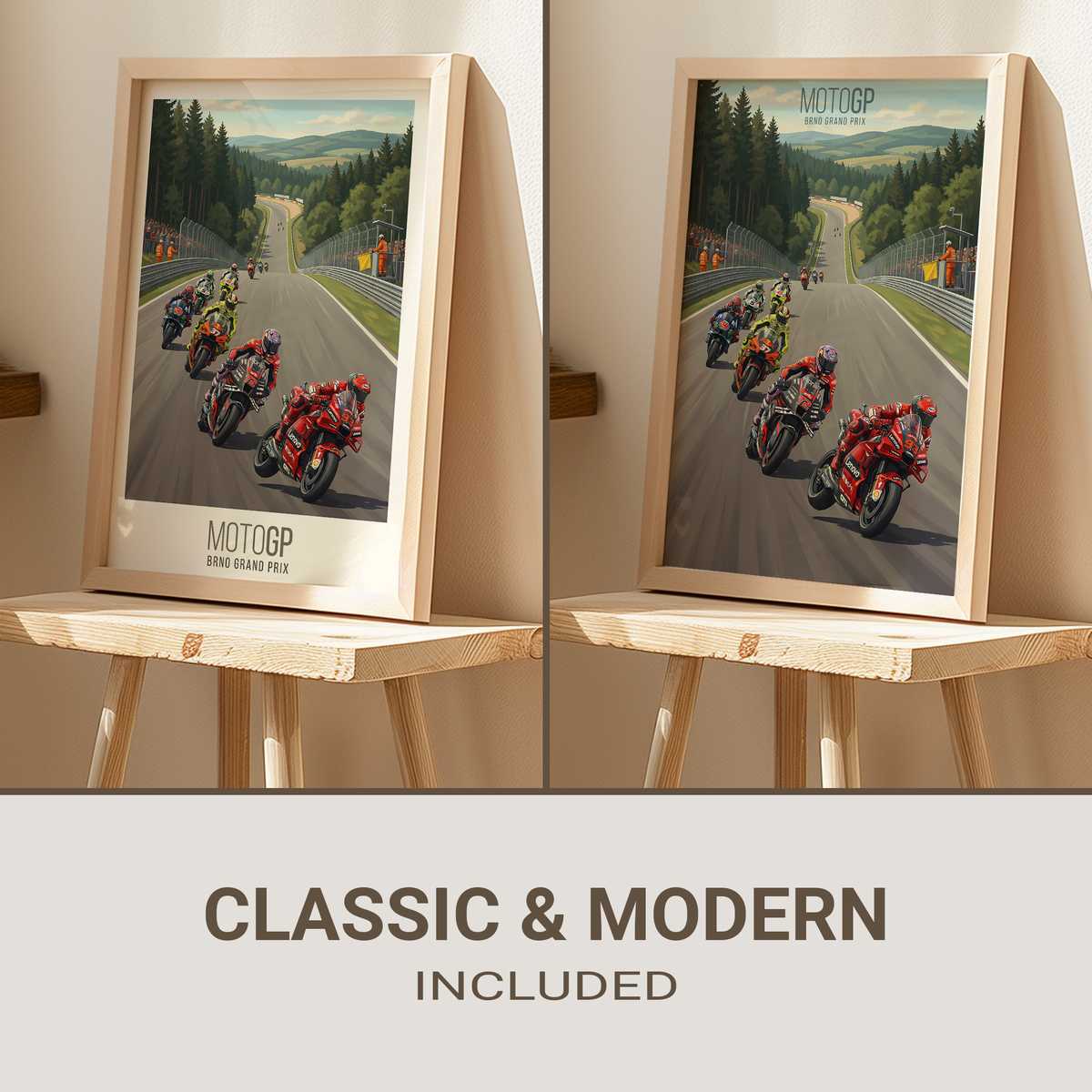
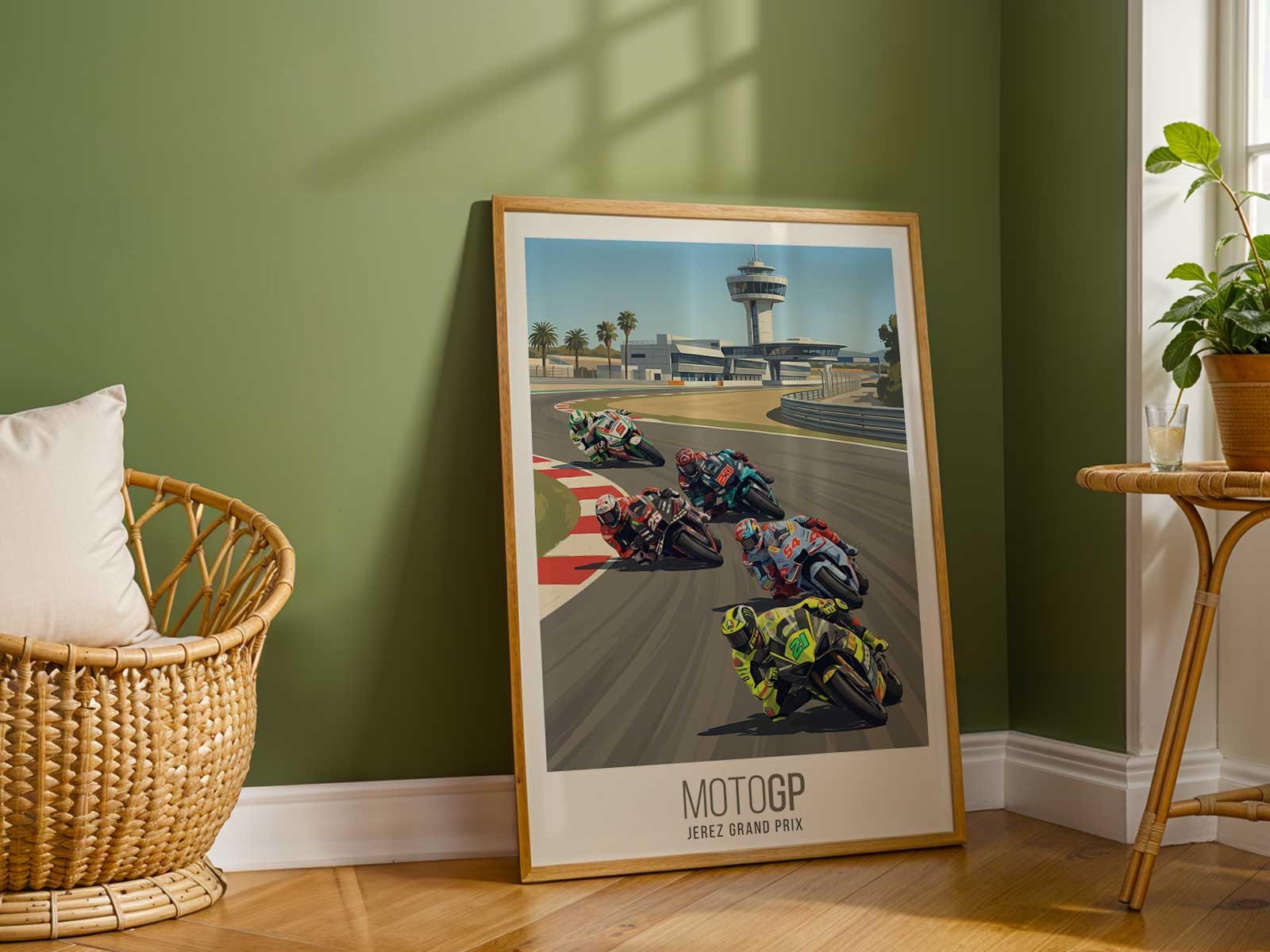
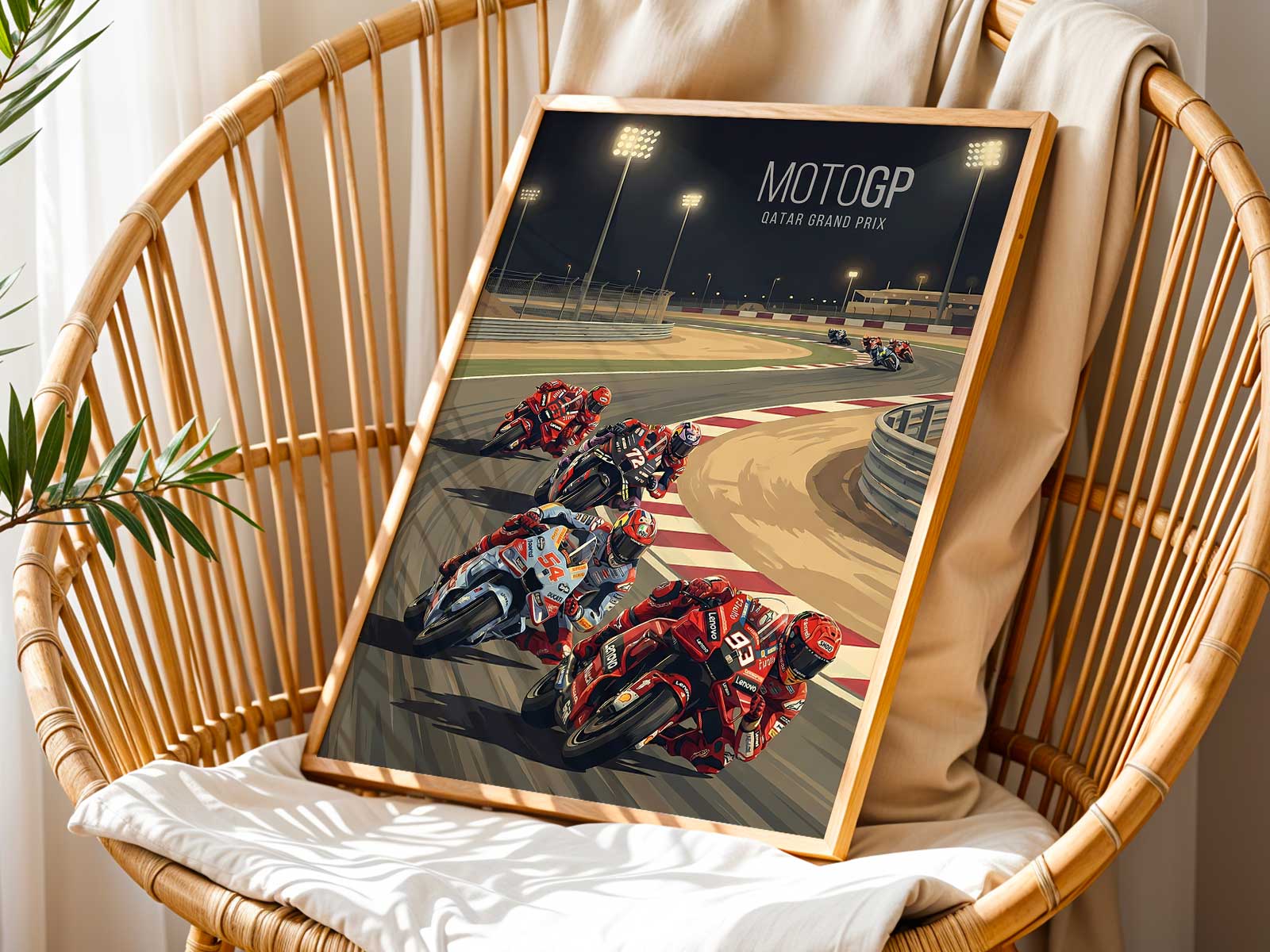
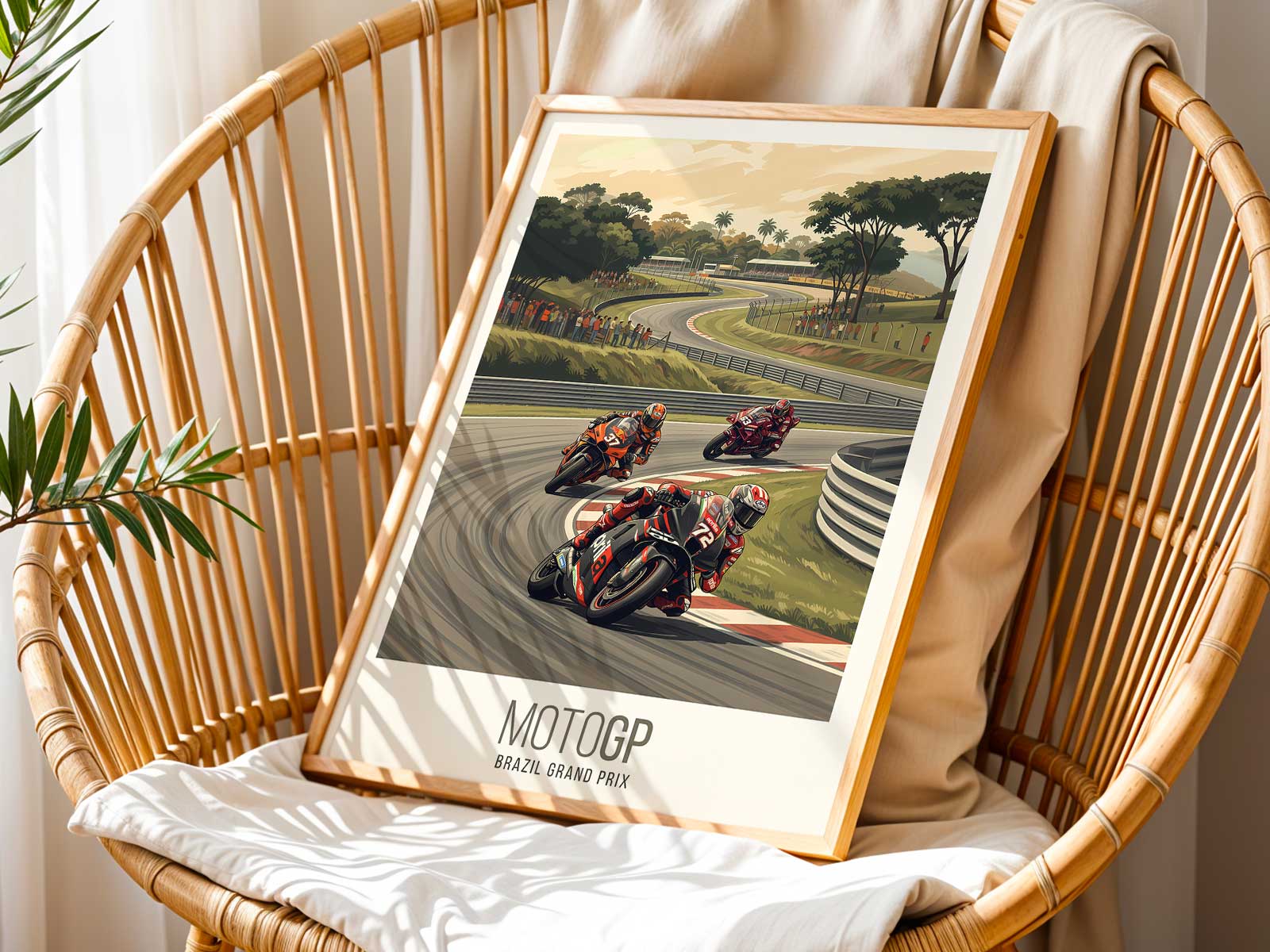
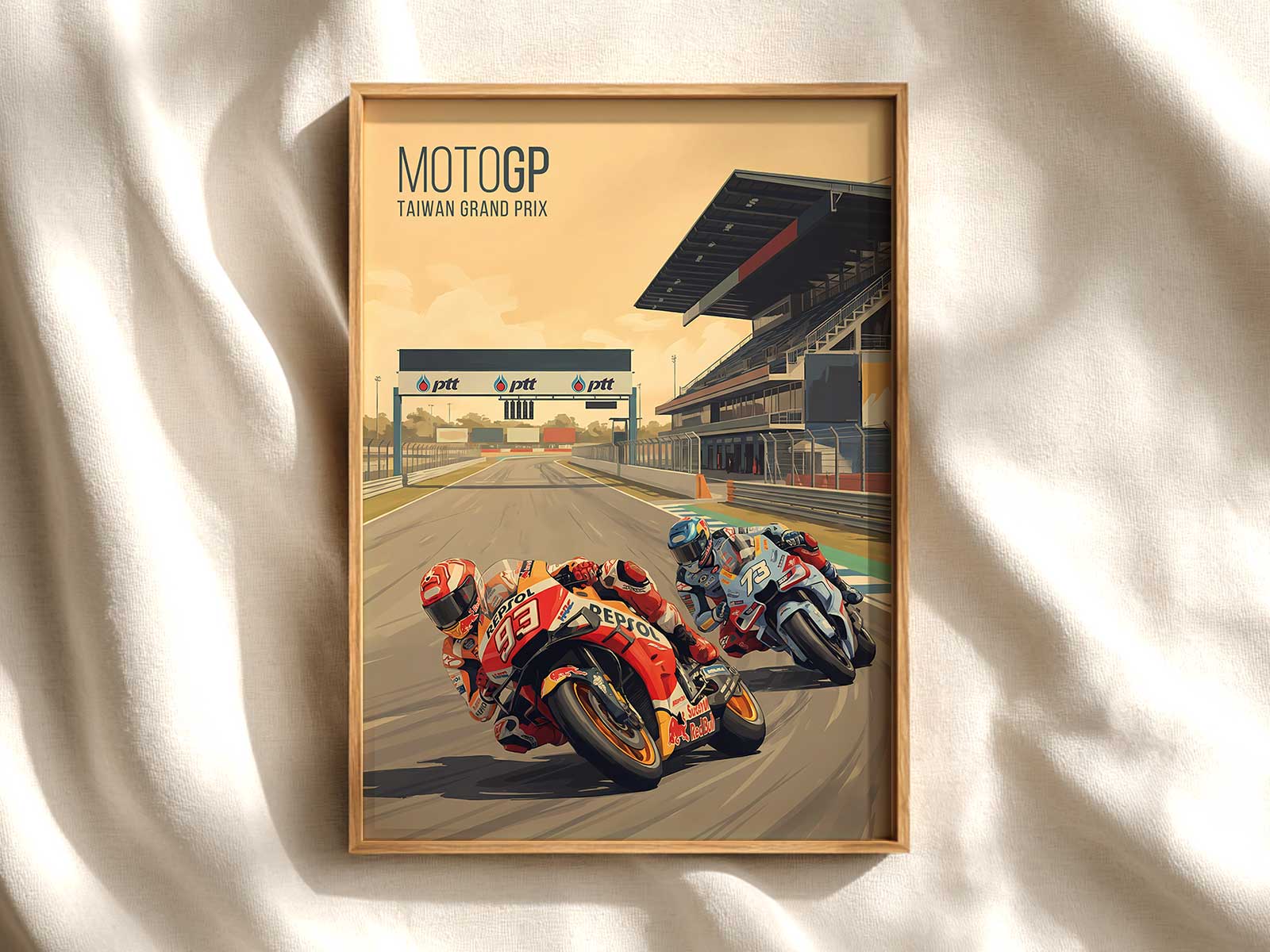
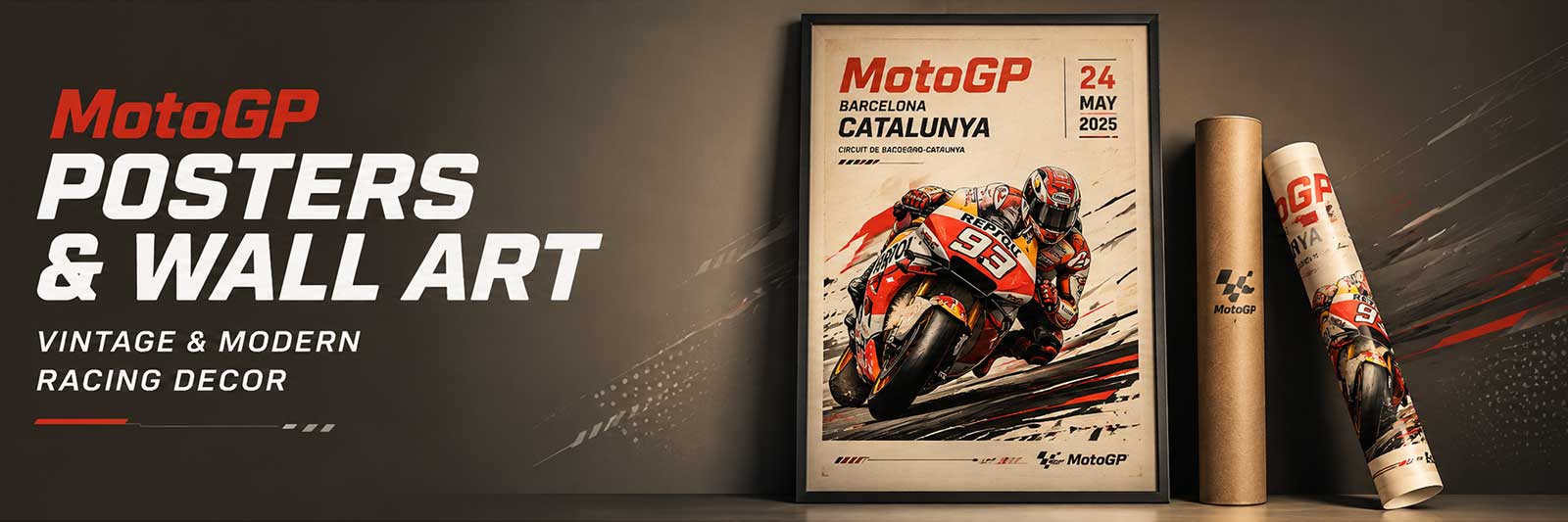
A Honda MotoGP poster that centres on the rider is more than a souvenir: it is a study in human balance, kinetic intent and visual authority. In this composition the rider’s body becomes the sculptor of the moment — the forearm pressing into the tank, the knee carving the air, the head tucked to cut wind — all precise, readable gestures that translate speed and effort into a single static image. That compression of motion into posture is what gives the artwork its dramatic charge.
Look first at the overall silhouette. The lean angle shapes a tense diagonal across the frame, immediately suggesting lateral force and commitment. The rider’s spine and shoulders are an axis of control, not merely reacting to speed but shaping it: chest low, elbows out, fingers poised on the brake and throttle. These micro-positions communicate a blend of aggression and calm — aggression in the intent to push the tyre to its edge, calm in the composure required to do it without panic. That duality is rare in sport imagery and makes the poster a compelling focal point in any room.
[IMAGE_INSERT_ARTICLE_01]
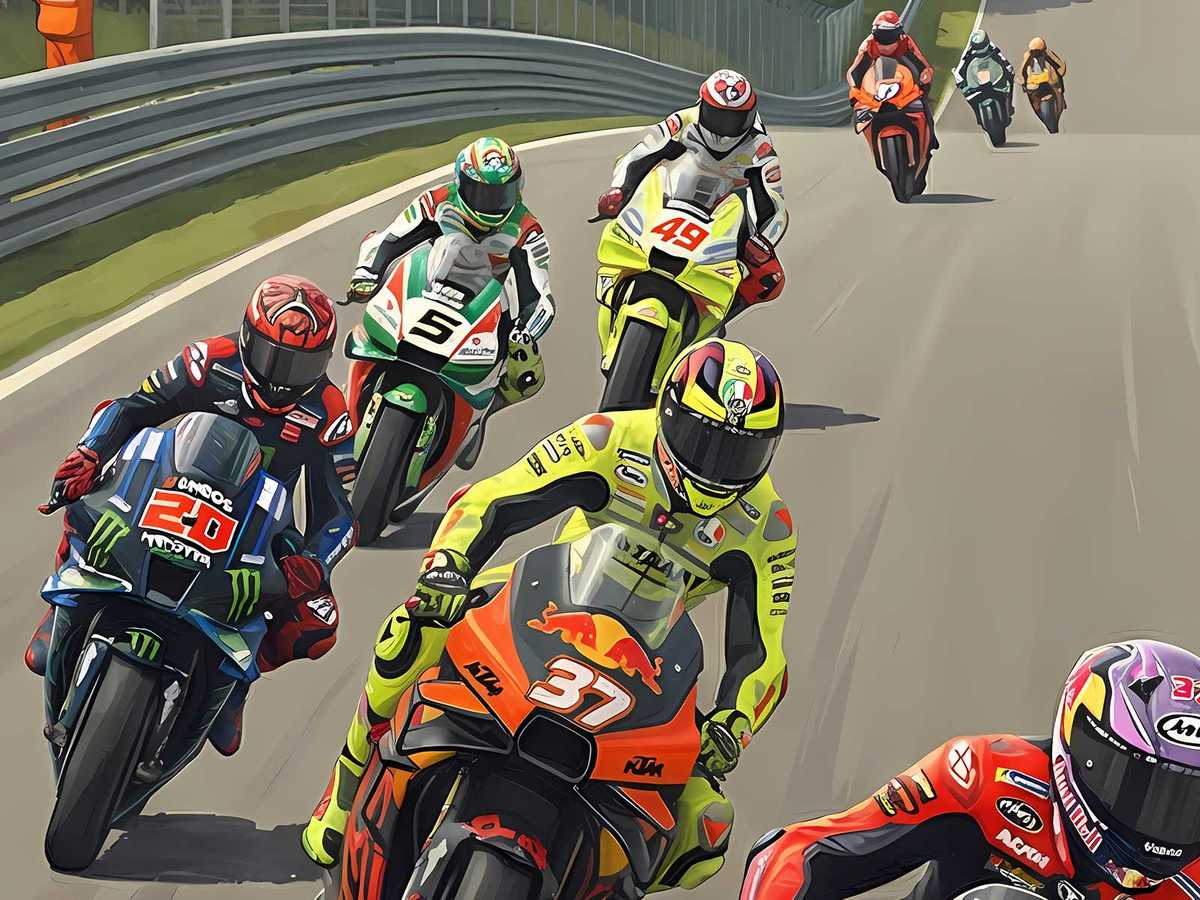
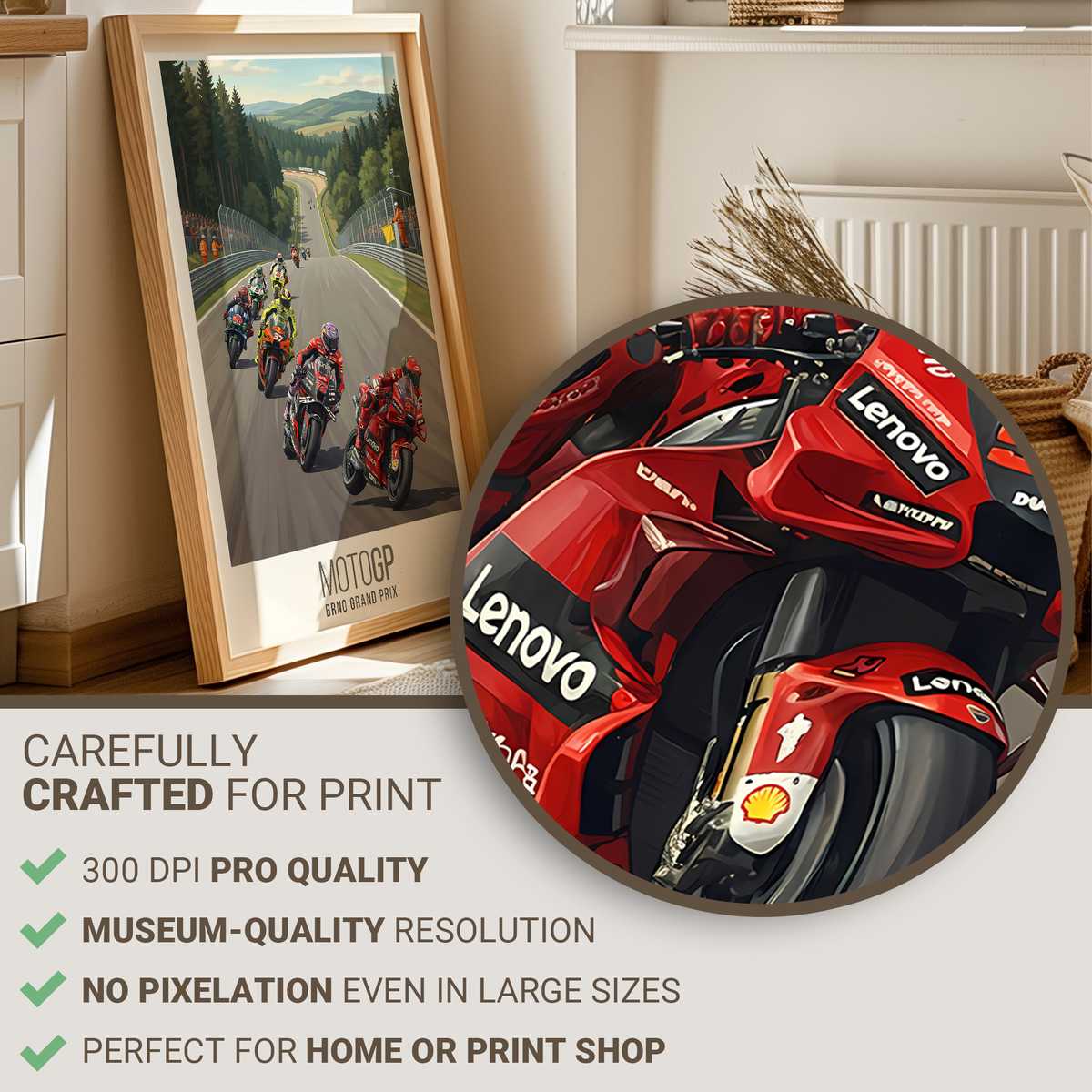
Zooming into the hands and head reveals the visual language of precision. Slight tension in the hands, the angle of the wrists, and the direction of the helmet visor read like a compass pointing to focus. The rider’s gaze — even behind a dark visor — is legible through helmet tilt and body alignment: it anchors the composition. This small but undeniable sense of purpose turns the rider into the visual centre of the artwork; the bike and background become supporting players that frame the human will driving the scene.
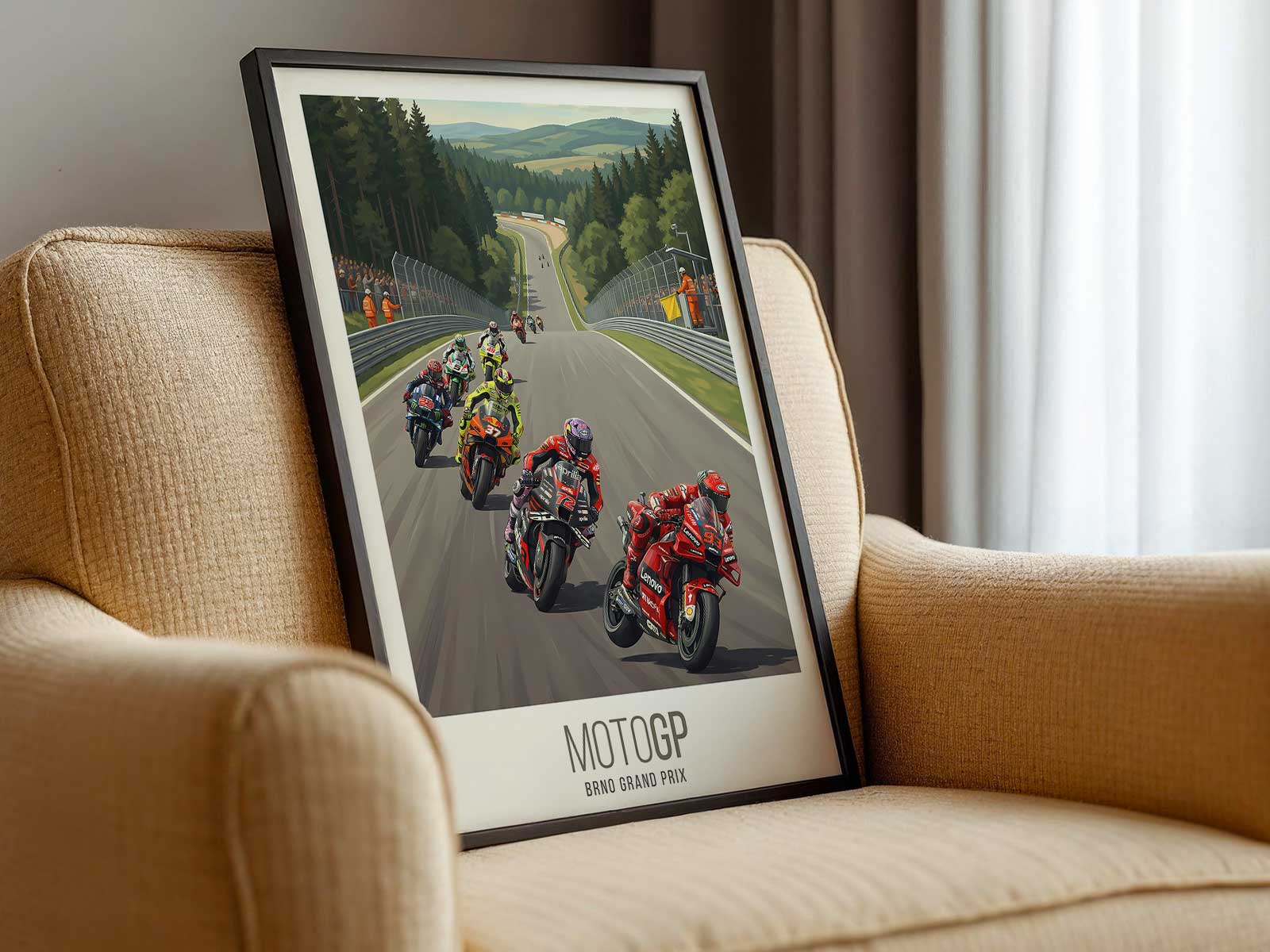
Equally important is the interplay between controlled aggression and measured restraint. The tucked-in posture suggests aerodynamic intent and technical mastery rather than reckless bravado. That pictorial discipline is what makes the poster suitable beyond a racetrack shrine: it reads as a study in craft and concentration that resonates in offices, creative studios, garages, and game rooms. Hung above a workbench or over a sofa, the image supplies energy without chaos, acting as both motivation and aesthetic anchor.
Colour, contrast and negative space amplify the rider’s authority. A limited palette or a strong spotlight on helmet and shoulders isolates the figure and intensifies presence. Shadows beneath the knee and on the upper arm create tactile weight, giving the impression that the rider could slip back into motion at any moment. This sense of imminent movement is what makes rider-led MotoGP art feel alive: viewers respond to posture first, then to brand and livery, so the human gesture carries the emotional weight.
Finally, a single rider in frame defines atmosphere more decisively than a crowded race shot. One person in an extreme pose reads as an idea — determination rendered visible — and that conceptual clarity is why collectors and interior designers gravitate to such pieces. The artwork becomes a statement about focus and control, a piece that can sharpen a room’s character while also inviting repeated study. It rewards close inspection: the longer you look, the more the posture reveals about strain, timing and intention.
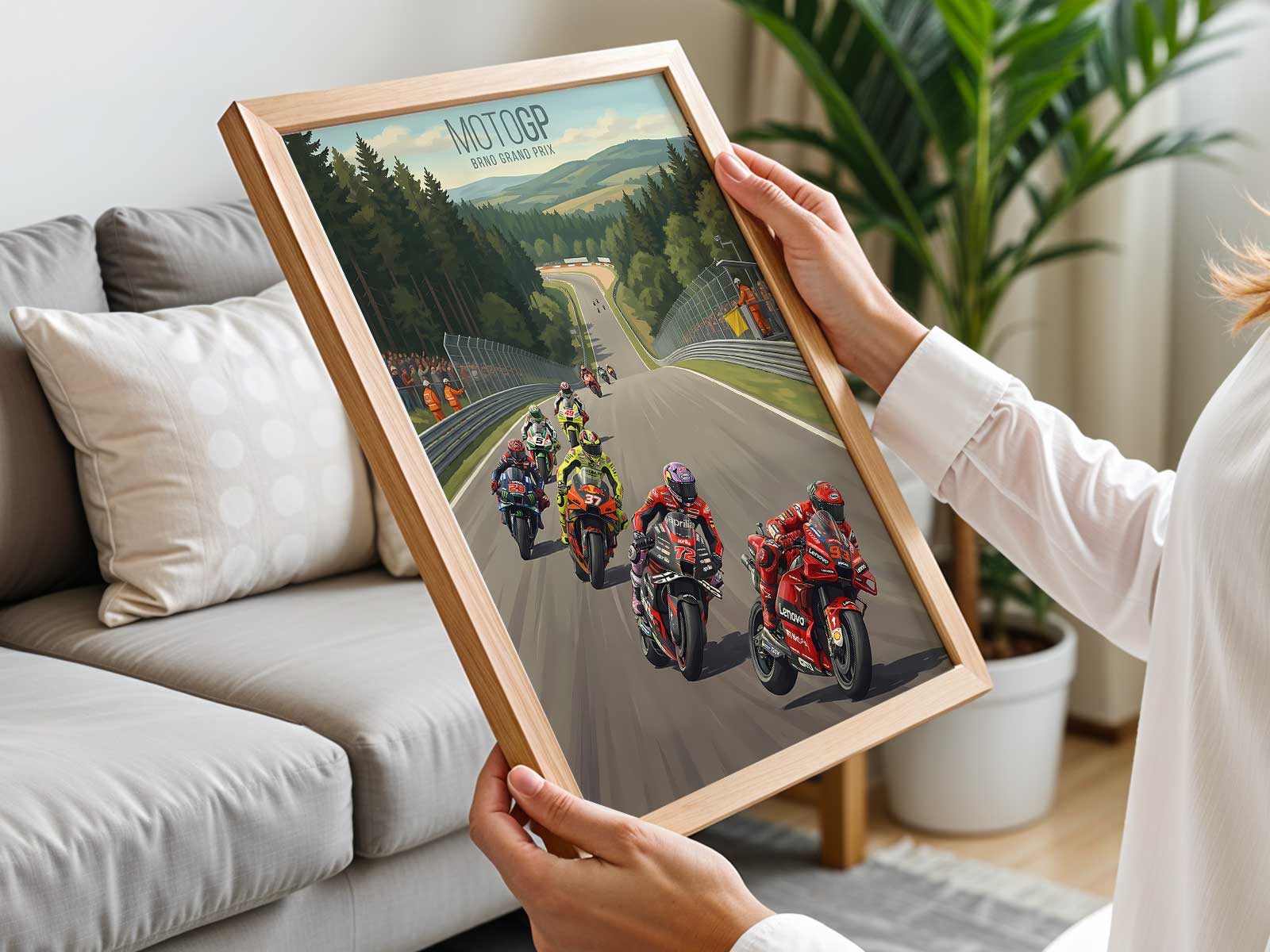
For anyone choosing a Honda MotoGP poster as wall art, consider how the rider’s posture will interact with your space: a decisive lean invites directional placement, while a helmet-glance can align with sightlines to create dialogue with the room. The result is not simply decoration but a visual manifesto of effort and determination.